
“Jonathan Delachaux, Benoit Huot, Hipkiss, Malkos Reilly”
….
Après 30 ans de peinture, Jonathan Delachaux revient à Neuchâtel, la ville où, adolescent, il montrait ses premiers travaux. Ce retour agit comme une boucle, comme un pli dans le temps, une mise en abyme vertigineuse où les débuts de l’artiste rejoignent le monde fictif créé il y a 30 ans. Un monde peuplé de figures mythiques, de lieux fictifs et de récits déployés à travers les biographies de Vassili, Johan et Naïma, et de leur mémoire picturale. Trois personnages qui, à travers son œuvre, ont acquis le droit de vieillir, de voyager et, pour certains, de s’éteindre. Trois décennies de peinture et un retour aux sources géographiques.
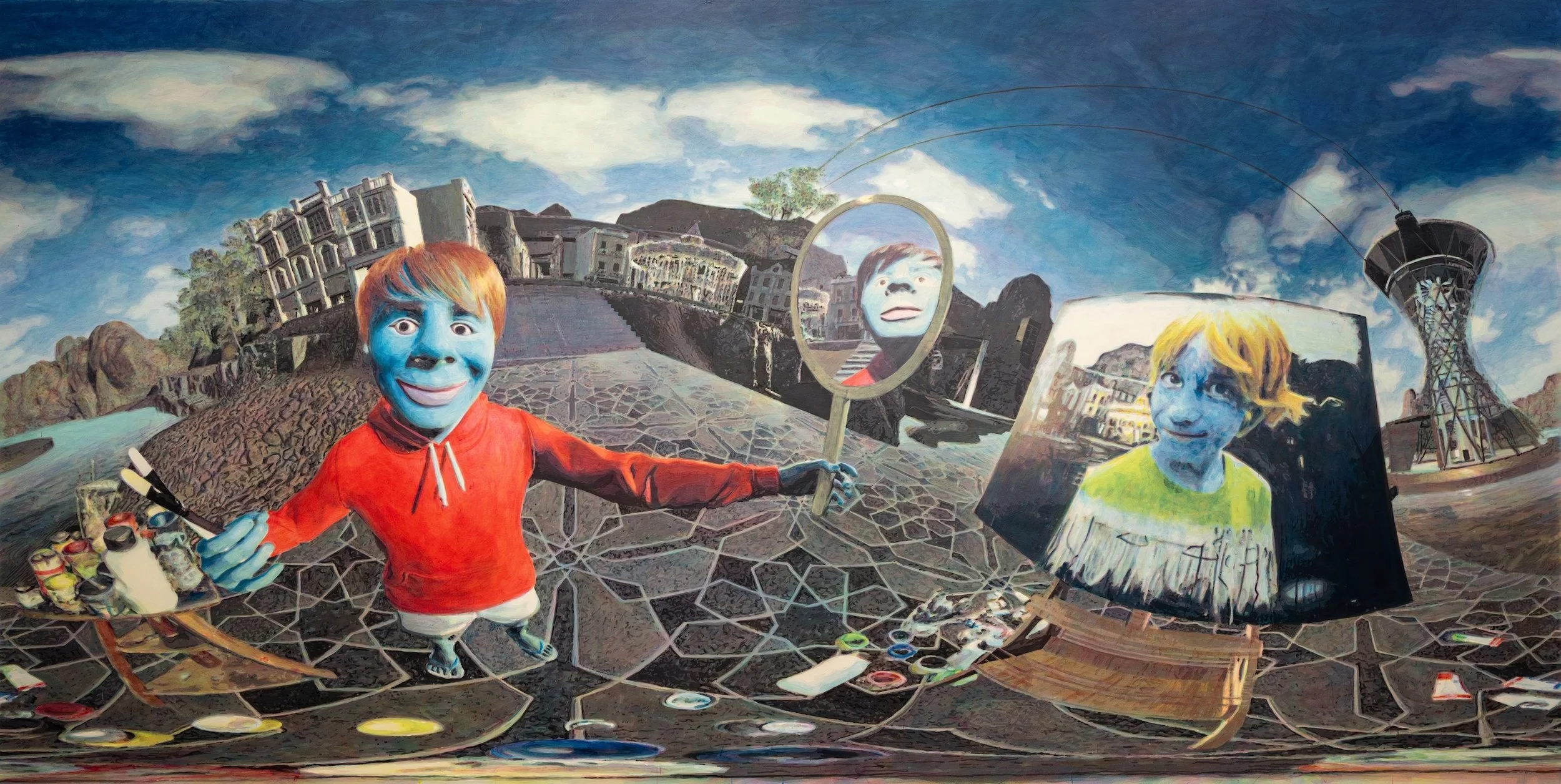
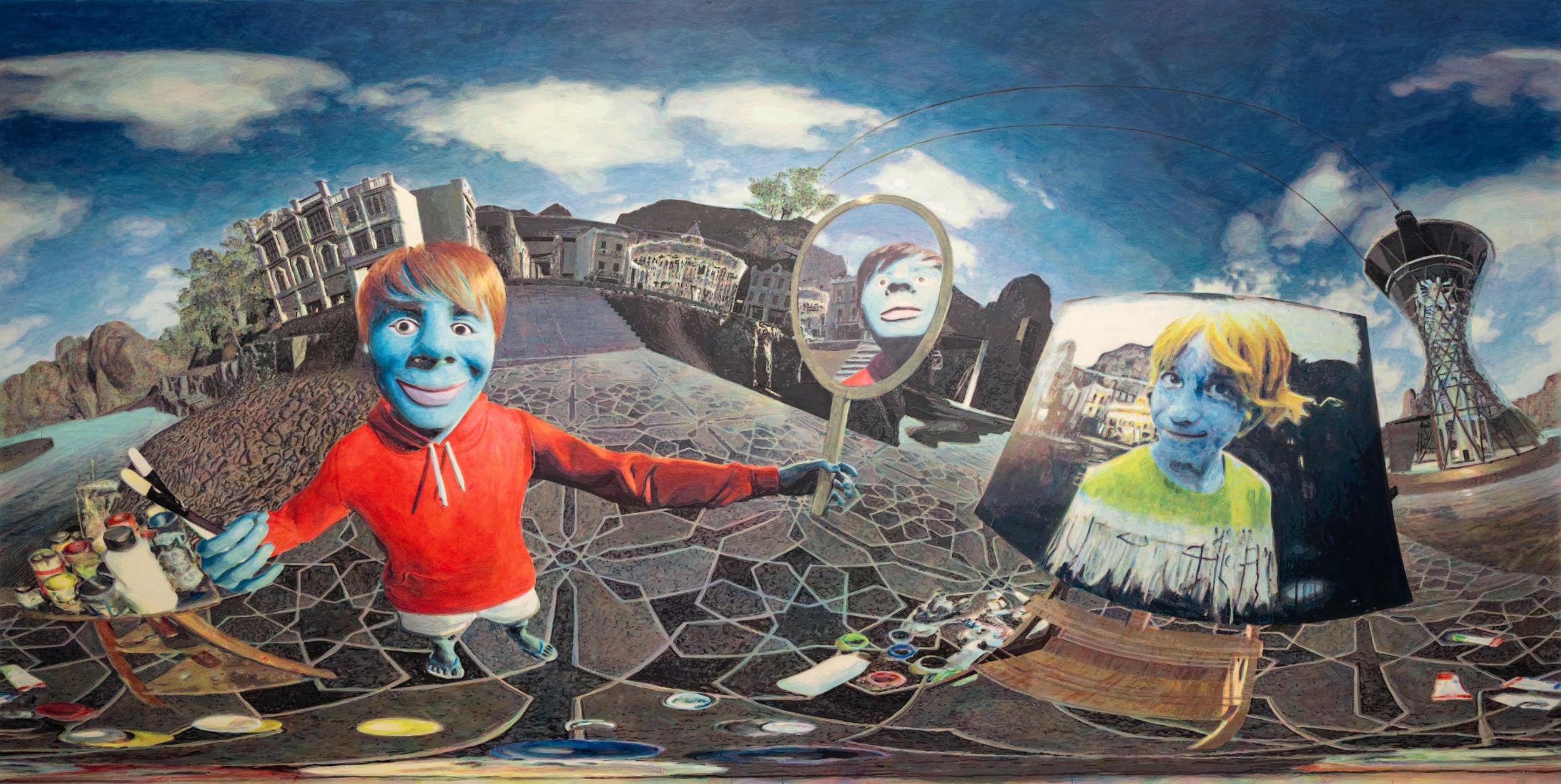
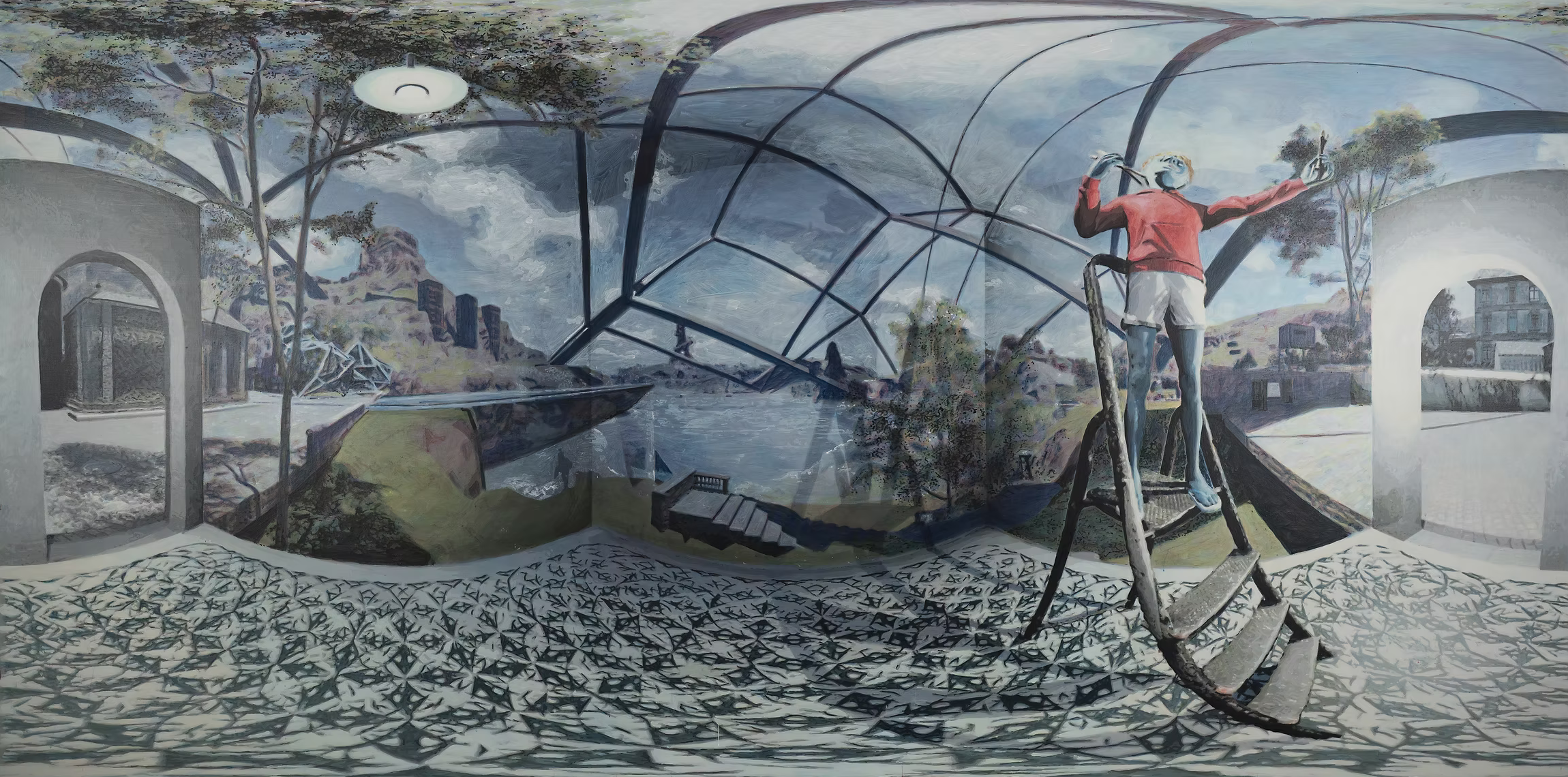
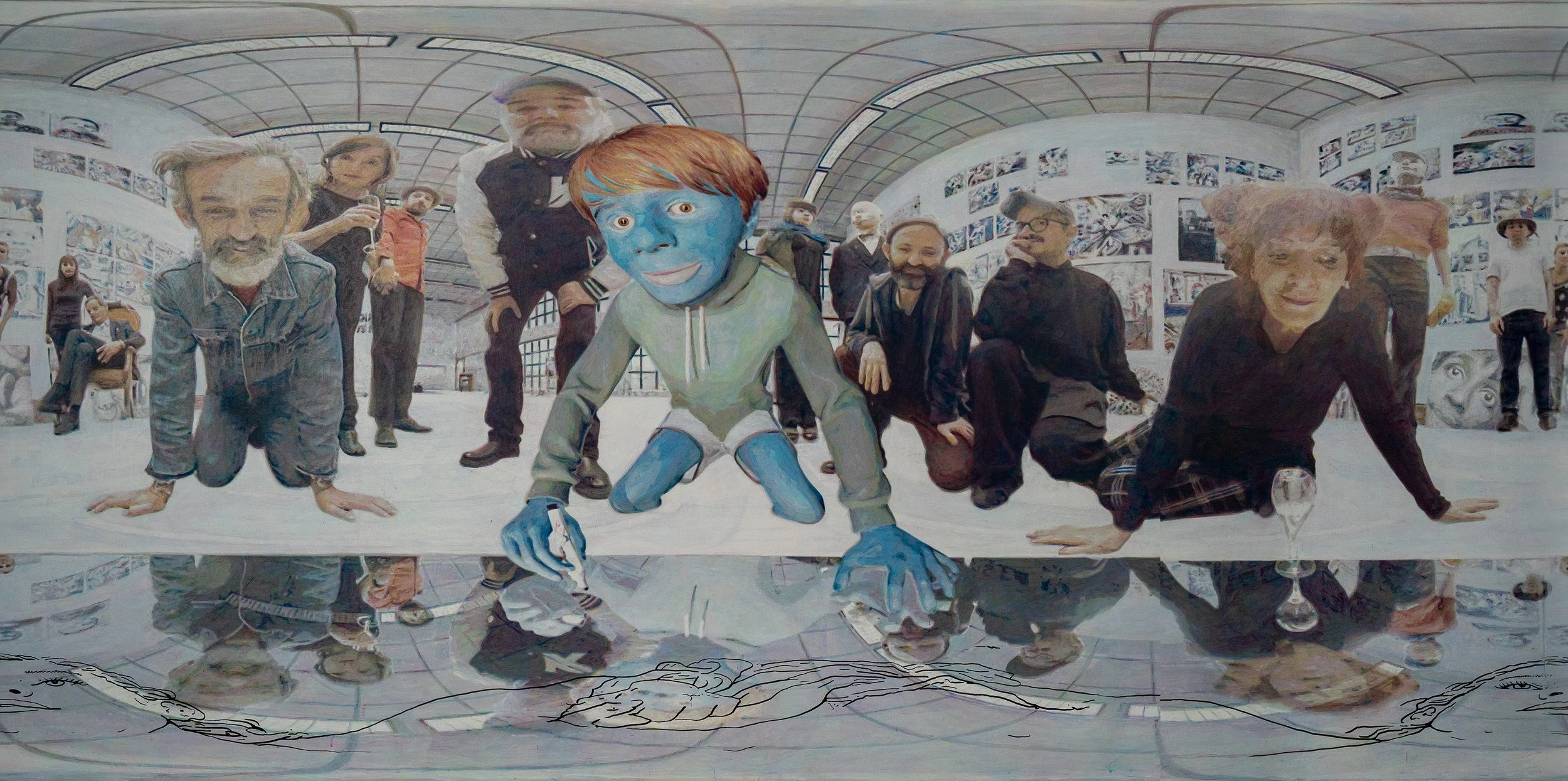
Au centre de cette exposition : Malkos Reilly, fils de Naïma, et figure d’une nouvelle génération. Malkos est un peintre de treize ans résidant à Tchan-Zâca, un archipel fictif et flottant que Jonathan Delachaux décrit comme un territoire artistique autonome, qu’il documente avec la précision d’un cartographe. Atteint d’argyrisme, Malkos porte sur sa peau les reflets bleutés d’une singularité biologique qu’il transmute en identité artistique. Ne nous trompons pas, les tableaux que vous voyez sont ceux de Jonathan Delachaux. Et le sujet est Malkos. Transfert troublant, Delachaux peint le peintre. Et dans l’espace de la Galerie C, les œuvres sont des fenêtres sur l’atelier de l’adolescent. C’est une mise en abyme, entre le réel et la fiction, l’œuvre et son reflet, le peintre et son sujet. Et par un glissement de réalité et de virtualité, les peintures de Malkos Reilly s’échappent du cadre et viennent habiter les mêmes murs. La peinture devient à la fois récit, décor, archive et projection.
L’exposition explore la porosité de ces frontières. L’atelier de Malkos devient un théâtre social. On y rencontre des proches, des collectionneurs et le double de l’artiste lui-même autour d’un miroir central qui, par le biais d’un dispositif immersif à 360°, abolit la distance entre le spectateur et la toile. La peinture ne se contente plus de figurer, elle advient.
Dans ce flux virtuel où les autoportraits du jeune peintre Malkos se succèdent, Delachaux réinterprète «L’Atelier du peintre» de Gustave Courbet et transforme chaque espace en un potentiel de peinture.
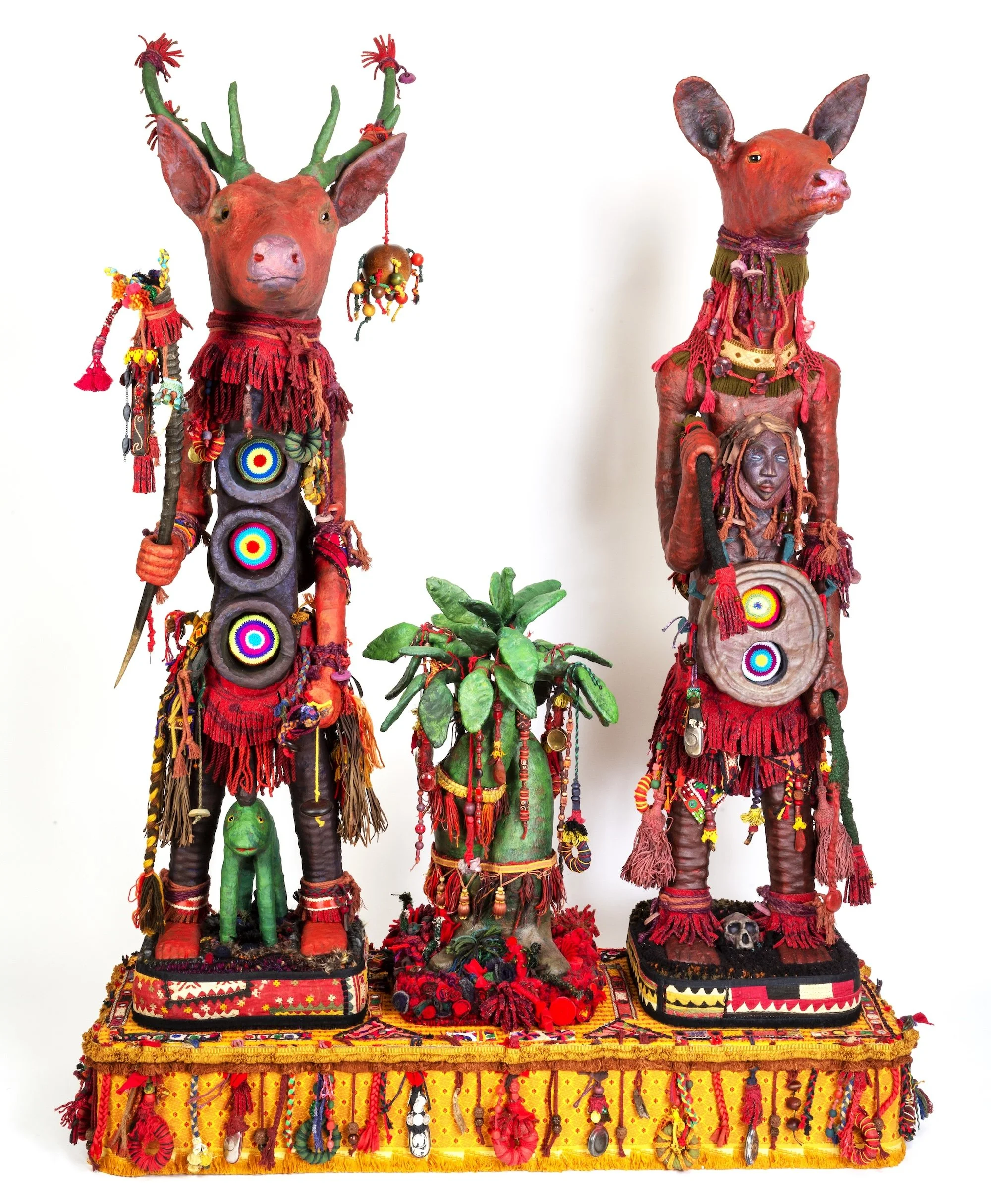
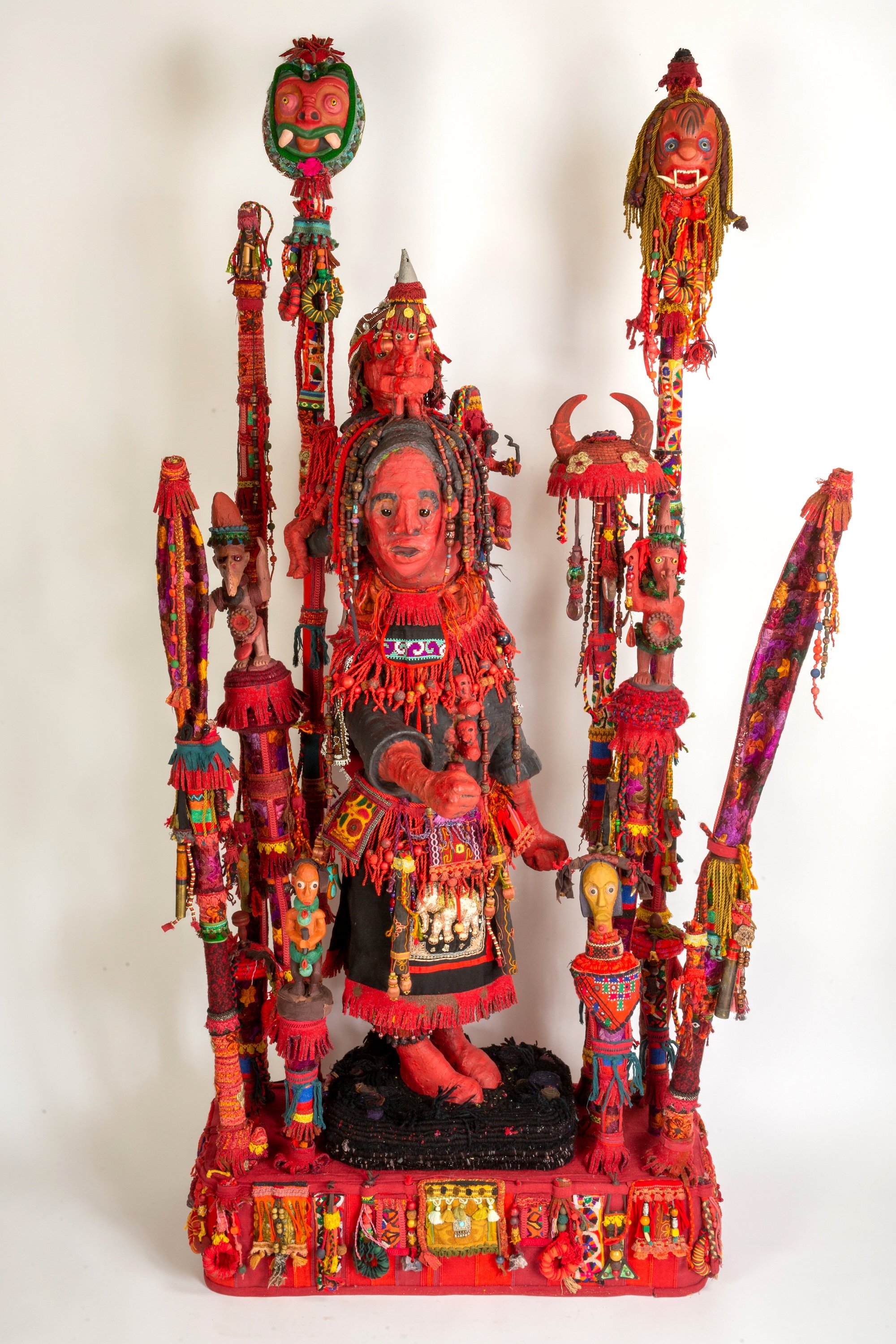
Benoit Huot nous transporte lui aussi dans une mythologie fictive, mais la sienne semble surgir de strates plus archaïques, comme si elle émanait d’un fond anthropologique commun. Il y assemble des imaginaires, des cultures et des formes issues de traditions vernaculaires pour composer des univers hybrides, à la frontière de l’animal, de l’artisanat et du totem. Ses figures, à la fois protectrices et inquiétantes, incarnent des forces ambivalentes. Autour d’elles se déploient des rituels, une spiritualité dense, peuplée de présences animales et d’entités diffuses, comme rassemblées autour d’un autel invisible. Chez Huot, l’hybridité devient un langage du sacré, une manière de convoquer des récits anciens dans une forme contemporaine, troublante et magnétique.
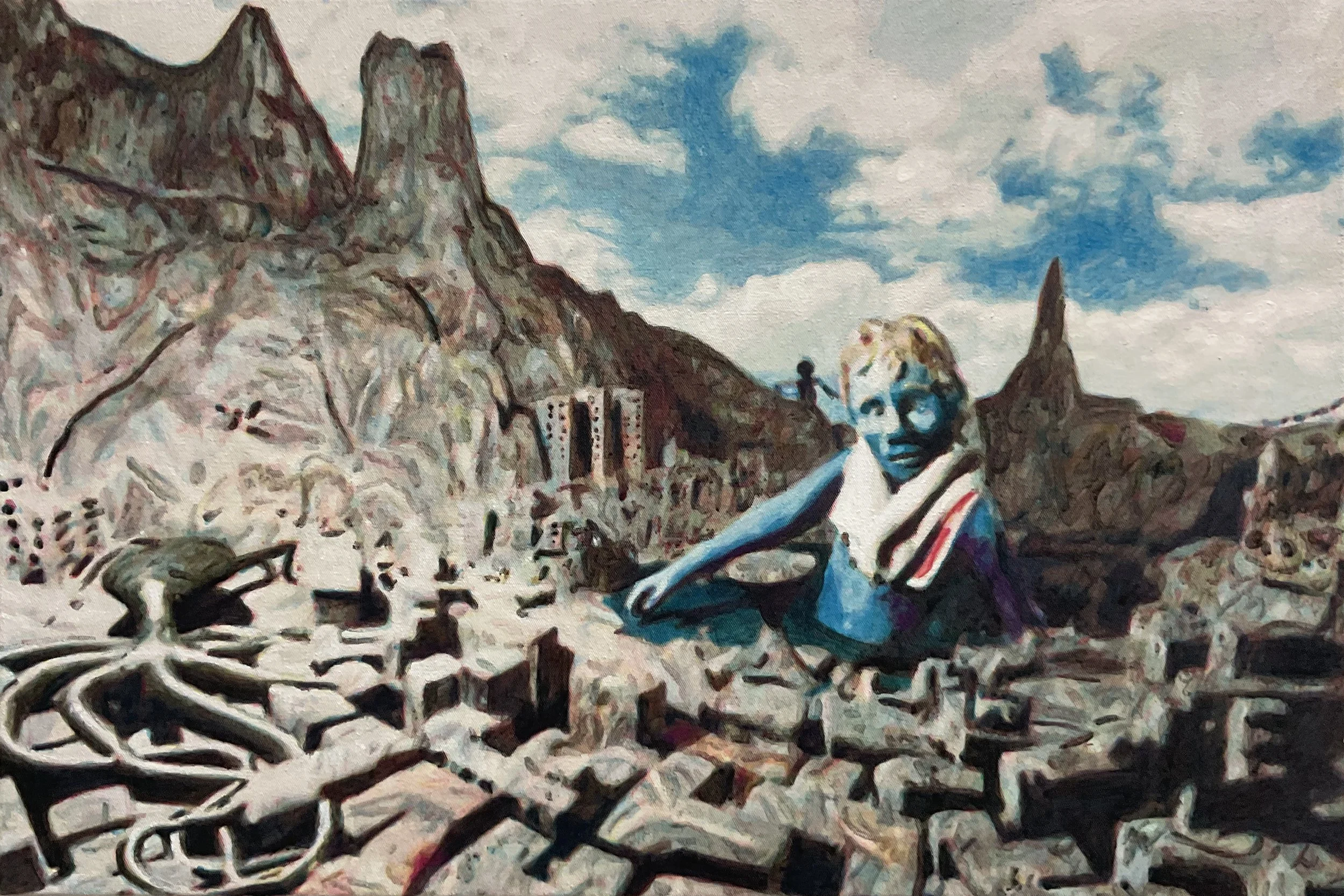
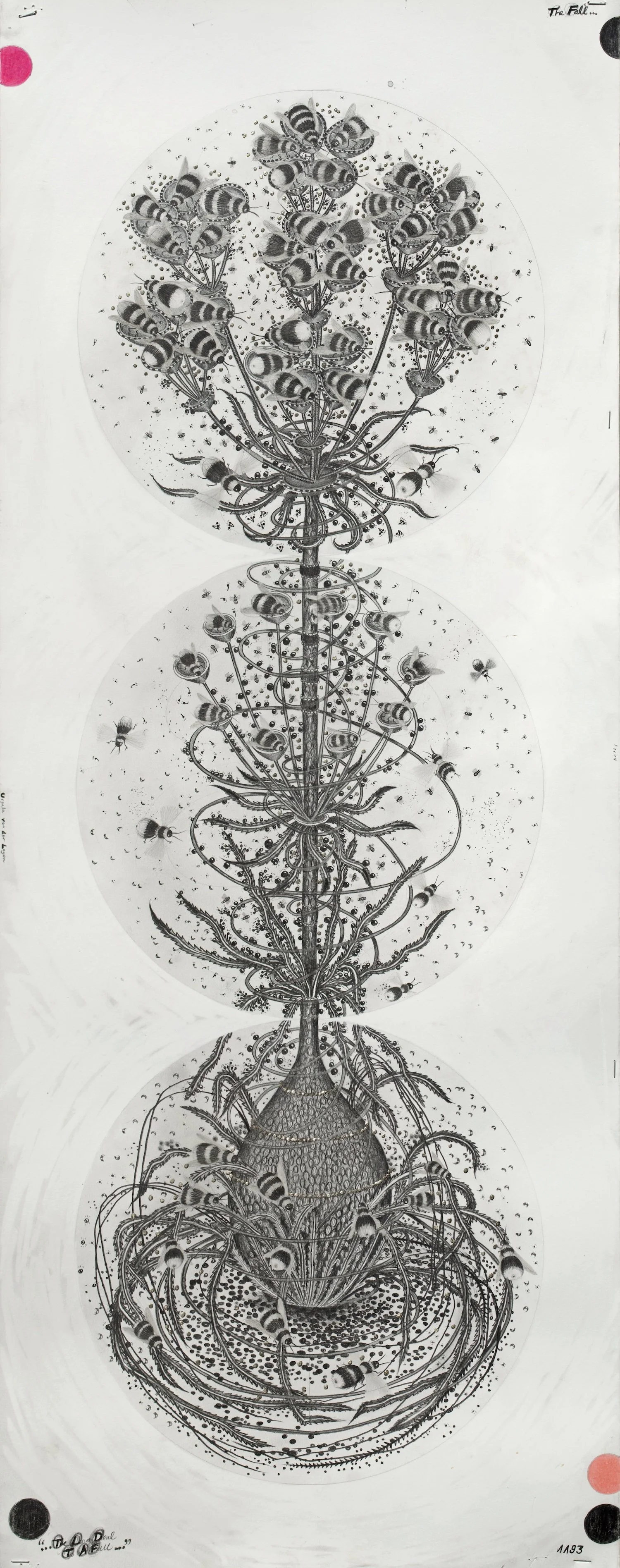
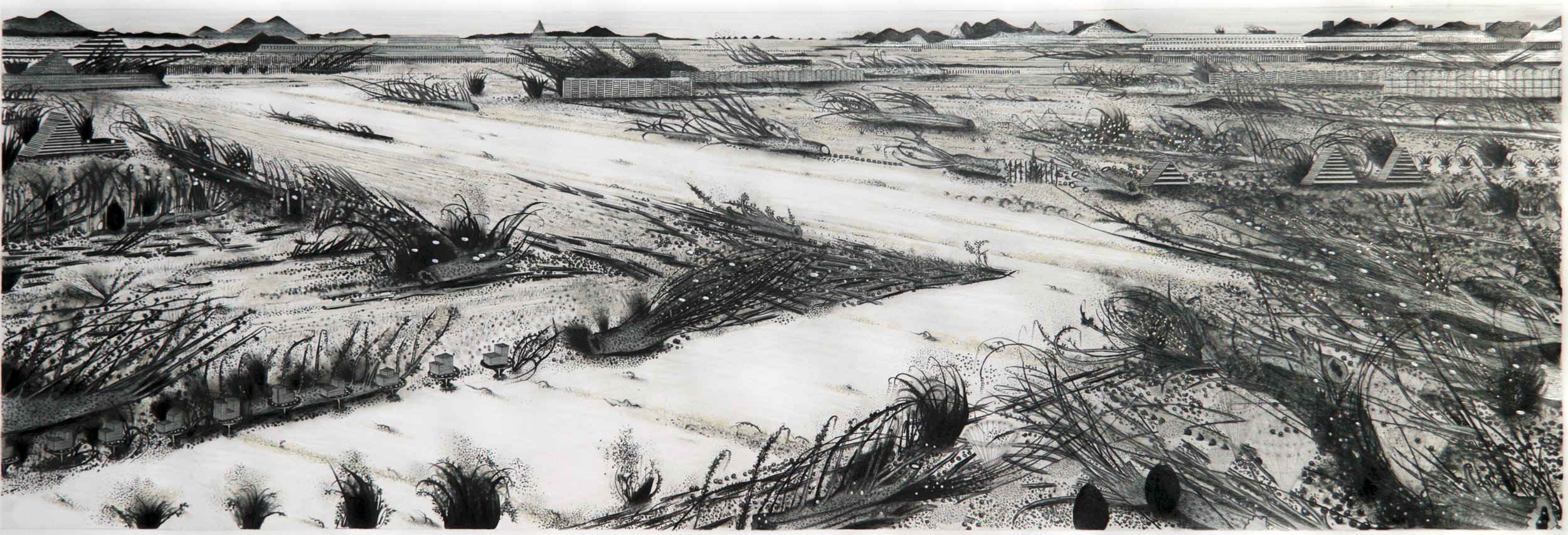
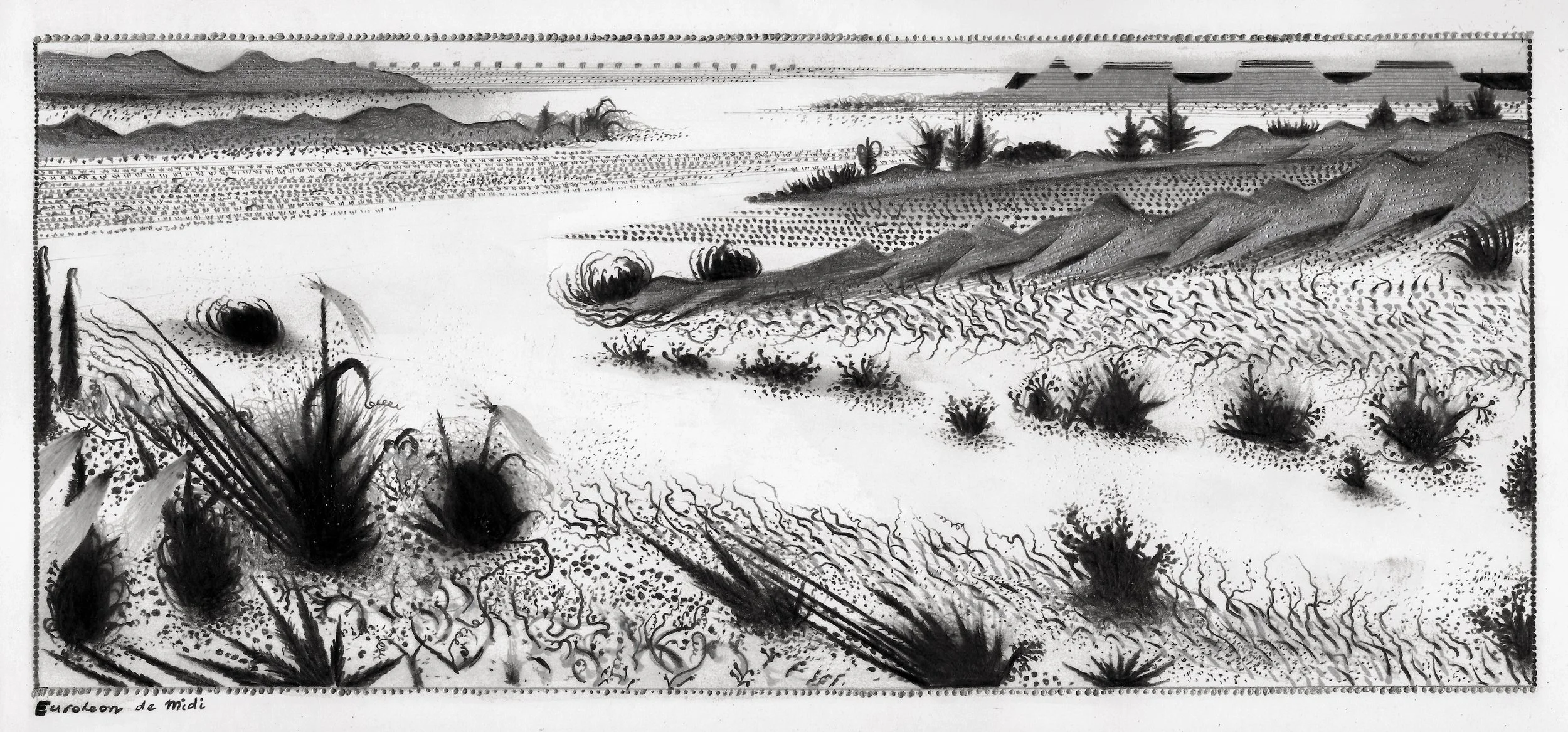
Cette tension entre transformation, hybridation et déplacement des formes trouve un écho dans le travail du duo Hipkiss, mais se déplace vers un registre plus explicitement politique. Là où Huot convoque des mythologies archaïques, Hipkiss ancre ses images dans des paysages reconnaissables, marqués par l’empreinte humaine. Leurs compositions, presque féroces, mettent en scène une nature altérée par l’industrialisation excessive du territoire anglais. Progressivement, un renversement s’opère : les végétaux absorbent les structures industrielles, les digèrent, les rejouent. Les plantes deviennent usines, cheminées et fumées, comme si le vivant mimait et subvertissait les logiques de production.
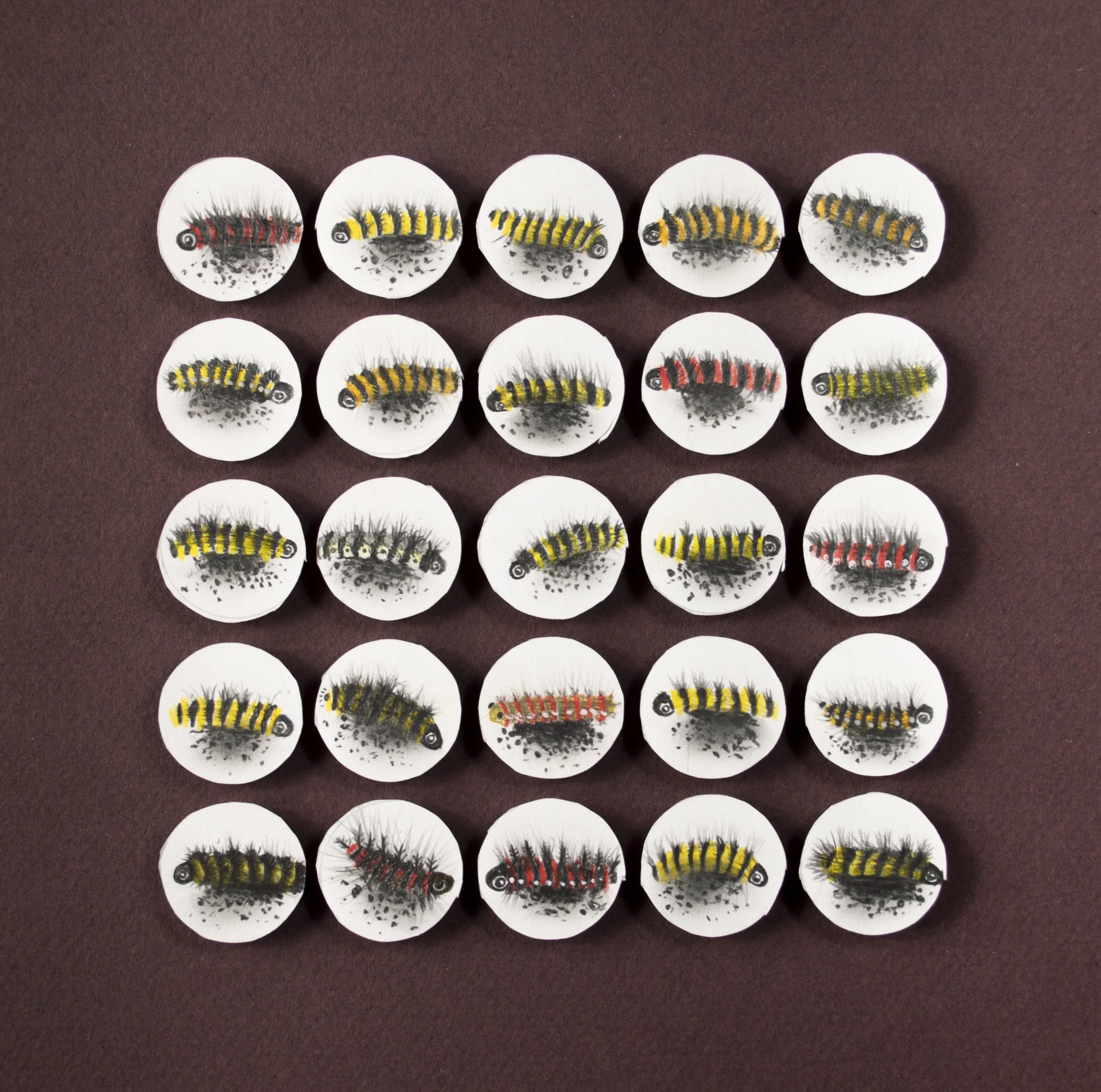
Ce basculement agit à toutes les échelles : dans les détails, où insectes, brindilles et pierres semblent muter les uns dans les autres, comme pris dans un flux continu de transformation ; et dans les vues d’ensemble, où des paysages luxuriants basculent vers une forme d’aridité paradoxale. Chez Hipkiss, l’hybridité n’est plus seulement mythologique ou symbolique, elle devient un outil critique, un moyen de penser les rapports de domination entre nature et industrie.
En réunissant les univers de Benoit Huot et du duo Hipkiss autour de celui de Jonathan Delachaux, la texture de l’archipel se densifie. Aux côtés d’œuvres qui dialoguent avec le sacré, l’organique et le mythologique, Delachaux interroge l’acte de peindre comme un espace narratif élargi. “Autour de Malkos” devient alors une réflexion sur la transmission, sur la fabrique des mythologies personnelles et sur la capacité de la peinture à contenir à la fois l’intime, la fiction et l’histoire de l’art.
Jeudi 30.04.2026, de 18h à 20h - Vernissage
Mercredi 27.05.2026, à 18h - Visite guidée de l’exposition en partenariat avec la Société des Amis des Arts
Télécharger le dossier de presse : ici
..
After 30 years of painting, Jonathan Delachaux returns to Neuchâtel, the city where, as a teenager, he exhibited his first works. This return feels like a full circle, a fold in time, a dizzying mise en abyme in which the artist’s early days converge with the fictional world he created 30 years ago. A world populated by mythical figures, fictional places and narratives unfolding through the biographies of Vassili, Johan and Naïma, and their pictorial memory. Three characters who, through his work, have earned the right to grow old, to travel and, for some, to pass away. Three decades of painting and a return to geographical roots.
At the heart of this exhibition: Malkos Reilly, son of Naïma, and a figure of a new generation. Malkos is a thirteen-year-old painter living in Tchan-Zâca, a fictional, floating archipelago that Jonathan Delachaux describes as an autonomous artistic territory, which he documents with the precision of a cartographer. Suffering from argyria, Malkos bears on his skin the bluish reflections of a biological singularity that he transforms into an artistic identity. Let us make no mistake: the paintings you see are those of Jonathan Delachaux. And the subject is Malkos. In a unsettling transposition, Delachaux paints the painter. And within the space of Galerie C, the works are windows onto the teenager’s studio. It is a mise en abyme, between reality and fiction, the work and its reflection, the painter and his subject. And through a shift between reality and virtuality, Malkos Reilly’s paintings break free from their frames and come to inhabit the walls themselves. The painting becomes at once a narrative, a setting, an archive and a projection.
The exhibition explores the porosity of these boundaries. Malkos’s studio becomes a social theatre. Here, we encounter friends, collectors and the artist’s own double gathered around a central mirror which, through a 360° immersive installation, abolishes the distance between the viewer and the canvas. The painting no longer merely depicts; it comes into being.
In this virtual flow where the self-portraits of the young painter Malkos follow one another, Delachaux reinterprets Gustave Courbet’s ‘The Painter’s Studio’ and transforms every space into a potential for painting.
Benoit Huot also transports us into a fictional mythology, but his seems to emerge from more archaic strata, as if it sprang from a shared anthropological foundation. He brings together imaginaries, cultures and forms drawn from vernacular traditions to compose hybrid worlds, on the borderline between the animal, craftsmanship and the totem. His figures, both protective and unsettling, embody ambivalent forces. Around them unfold rituals and a dense spirituality, populated by animal presences and diffuse entities, as if gathered around an invisible altar. In Huot’s work, hybridity becomes a language of the sacred, a way of summoning ancient narratives in a contemporary, unsettling and magnetic form.
This tension between transformation, hybridisation and the displacement of forms is echoed in the work of the Hipkiss duo, but shifts towards a more explicitly political register. Whereas Huot draws on archaic mythologies, Hipkiss anchors their images in recognisable landscapes, marked by the human footprint. Their almost ferocious compositions depict a natural world altered by the excessive industrialisation of the English landscape. Gradually, a reversal takes place: vegetation absorbs industrial structures, digests them, and re-enacts them. Plants become factories, chimneys and smoke, as if living organisms were mimicking and subverting the logic of production.
This shift is evident at every level: in the details, where insects, twigs and stones seem to merge into one another, as if caught up in a continuous flow of transformation; and in the wider views, where lush landscapes give way to a form of paradoxical aridity. For Hipkiss, hybridity is no longer merely mythological or symbolic; it becomes a critical tool, a means of reflecting on the power dynamics between nature and industry.
By bringing together the worlds of Benoit Huot and the Hipkiss duo around that of Jonathan Delachaux, the texture of the archipelago becomes denser. Alongside works that engage with the sacred, the organic and the mythological, Delachaux explores the act of painting as an expanded narrative space. “Autour de Malkos” thus becomes a reflection on transmission, on the construction of personal mythologies, and on painting’s capacity to encompass the intimate, fiction and art history.
Thursday, April 30, 2026, 6-8pm - Opening
Wednesday, May 30, 2026, 6pm - Guided tour of the exhibition in partnership with the Société des Amis des Arts
To download the press release : here
….