
“Eva Ayache-Vanderhorst, Sosthène Baran, Murielle Belin, Jules Carlito Beurrier-Loncan, Marisa Cornejo, Tiziano Foucault-Gini, Anne Golaz, Christian Gonzenbach, Sophie Jodoin, Holly Mills, Eleanor Diaz Ritson”

….
« Je n'entendrai plus sa voix. C'est elle, et ses paroles, ses mains, ses gestes, sa manière de rire et de marcher, qui unissaient la femme que je suis à l'enfant que j'ai été. J'ai perdu le dernier lien avec le monde dont je suis issue. »
- Annie Ernaux, Une femme, 1988
La mère occupe une place particulière dans l’histoire de l’art. Berceau de la civilisation, figure de fertilité et de transmission, elle est omniprésente dans les représentations, des sculptures néolithiques de femmes aux formes généreuses découvertes notamment à Malte, jusqu’à toute l’histoire de l’art occidental judéo-chrétien. La mère y devient tour à tour déesse, impératrice, mère de Rome, puis Vierge — sainte mère, figure de pureté et de maternité spirituelle — inspirant certains des plus grands peintres et sculpteurs, de Michelangelo à Raffaello et Leonardo da Vinci. Les portraits royaux et dynastiques affirment quant à eux la filiation et le rôle politique de ces mères, notamment chez Liotard ou Élisabeth Vigée Le Brun. Avec la Révolution, la mère devient aussi une allégorie politique, comme chez Delacroix ou Daumier. Pourtant, pendant des siècles, la mère a surtout été représentée depuis l’extérieur, et souvent par des hommes. Vierge, sainte, reine, mère idéale, figure sacrée ou condamnable : elle semble assignée à des rôles précis. Au XXe siècle, les artistes femmes commencent à déplacer ce regard vers l’expérience vécue de la maternité, ses ambivalences, ses angoisses et ses contraintes. Louise Bourgeois et Niki de Saint Phalle explorent ainsi les liens complexes entre maternité, peur et tabous patriarcaux ; plus récemment, Annette Messager, Fatima Mazmouz ou Laetitia Ky interrogent à leur tour les représentations du corps féminin, de la grossesse, des fausses couches ou du droit à l’avortement. La maternité devient alors un lieu de réflexion politique sur le corps, les droits reproductifs, la justice, les violences et les inégalités liées à la parentalité.
Un nouveau regard se pose ainsi sur la maternité, mais aussi sur sa représentation dans l’histoire de l’art. Et peut-être reste-t-il une dimension de cette expérience qui échappe toujours à l’image : ce qui précède notre propre mémoire.
On pense souvent la relation mère enfant dans un sens vertical. En tant qu’enfant, on admire, on aime, on cherche, on rejette la mère. Pourtant, il existe une partie de cette relation qui nous échappe entièrement : les premières années de notre existence. Les plus déterminantes peut-être, et pourtant celles dont nous ne gardons presque aucun souvenir.
Nos premiers souvenirs ne sont pas les premiers instants de notre vie. Ils arrivent bien après. Avant eux, il y a des années entières dont nous ne savons presque rien. Cette mémoire n'a pas disparu. Elle existe ailleurs. Elle appartient à celle qui nous a vus naître, sourire, marcher, parler. À celle qui a porté nos premiers gestes, nos premières peurs, nos premiers élans. Mère biologique, adoptive, belle-mère ou toutes celles qui ont occupé cette place, elles sont souvent les seules dépositaires de cette part de notre histoire : cette vie-là est emportée par celle qui nous a élevé.
De la même manière que notre mémoire commence trop tard, le regard du visiteur et de la visiteuse arrive toujours après l'acte de création. Les hésitations, les intuitions, les gestes abandonnés, les doutes, les expériences qui ont façonné l'œuvre demeurent invisibles. Nous rencontrons alors une œuvre comme nous rencontrons notre propre existence : au milieu de son histoire. Le commencement est déjà passé. L'exposition devient ainsi un espace de transmission. Les œuvres ne cherchent pas à raconter la maternité de manière illustrative, mais à rendre perceptible ce qui demeure habituellement invisible : les mémoires portées par d'autres, les gestes de soin, les héritages, les corps qui gardent les traces du temps.
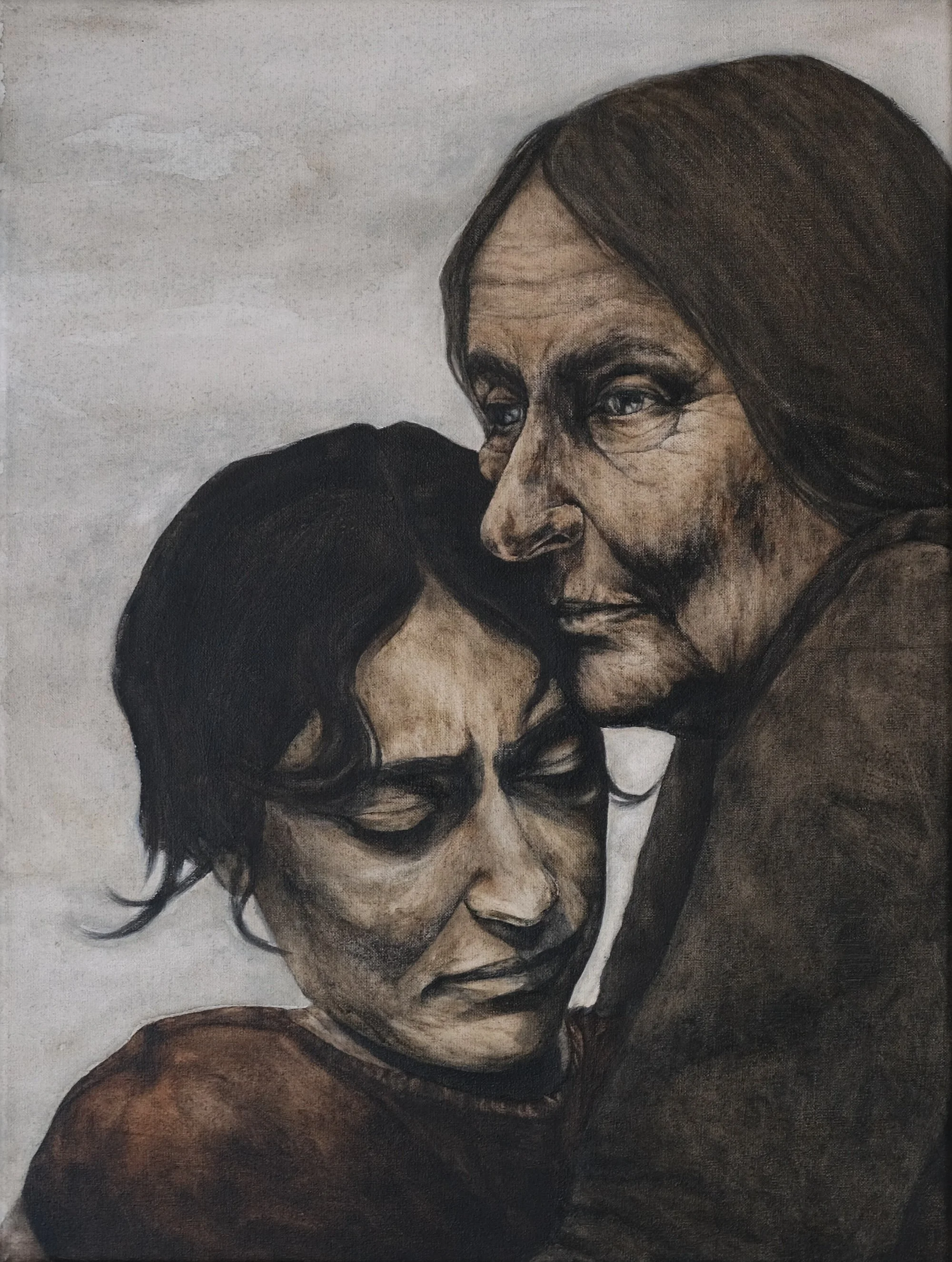
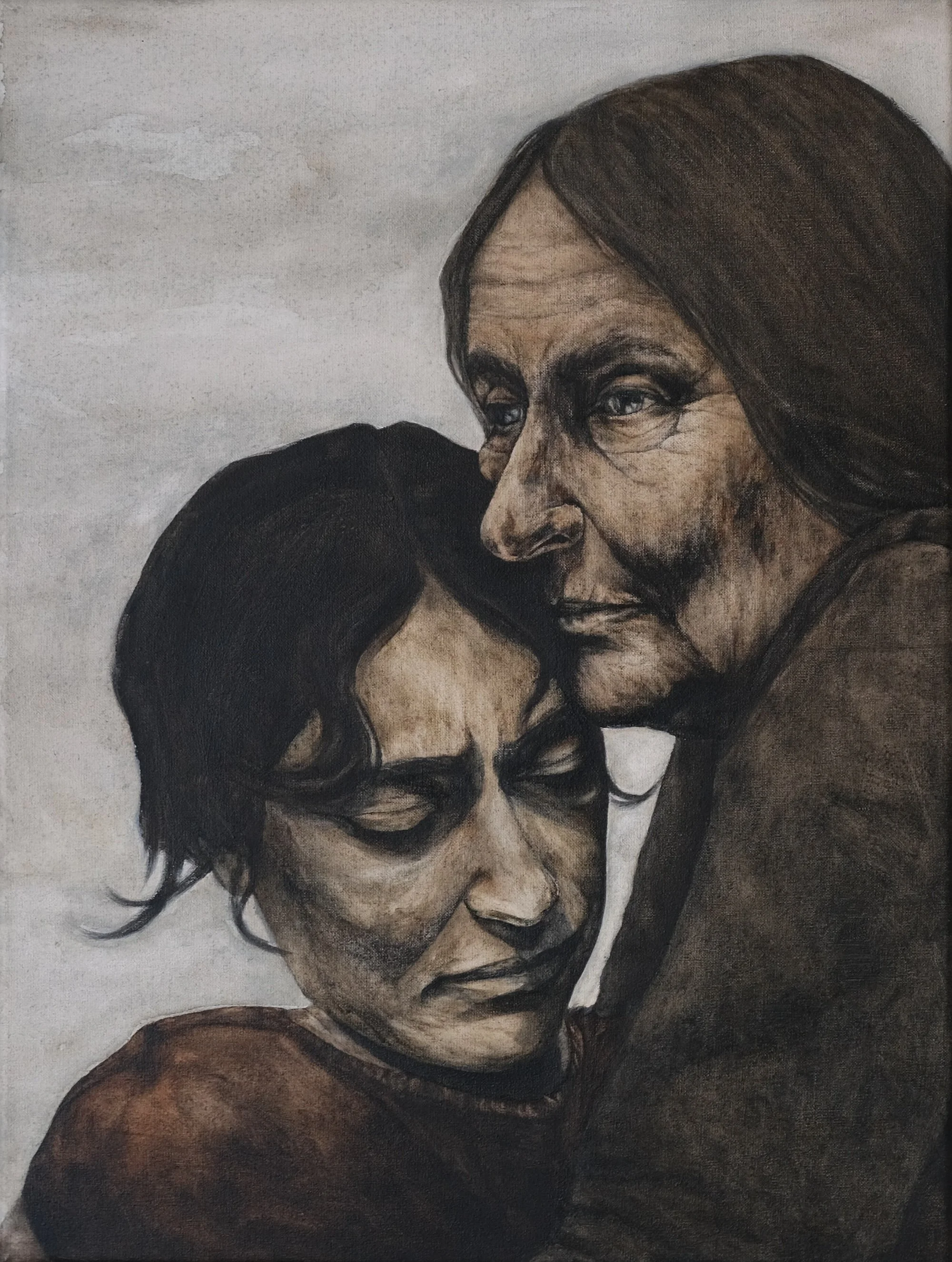
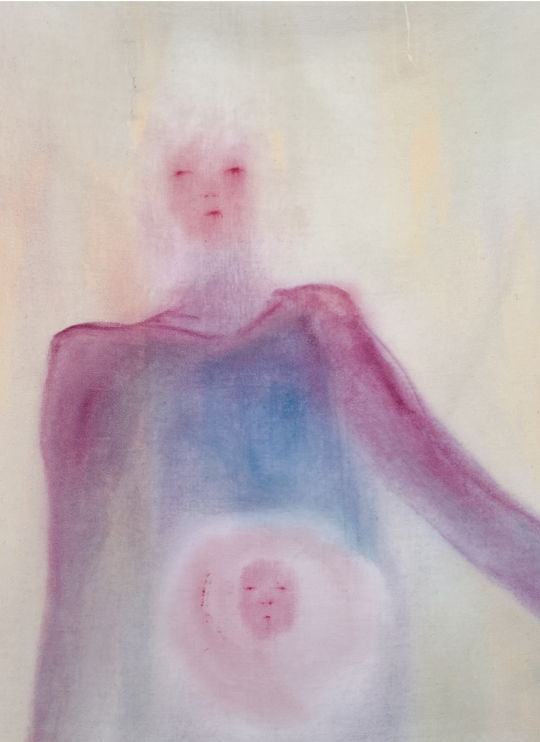
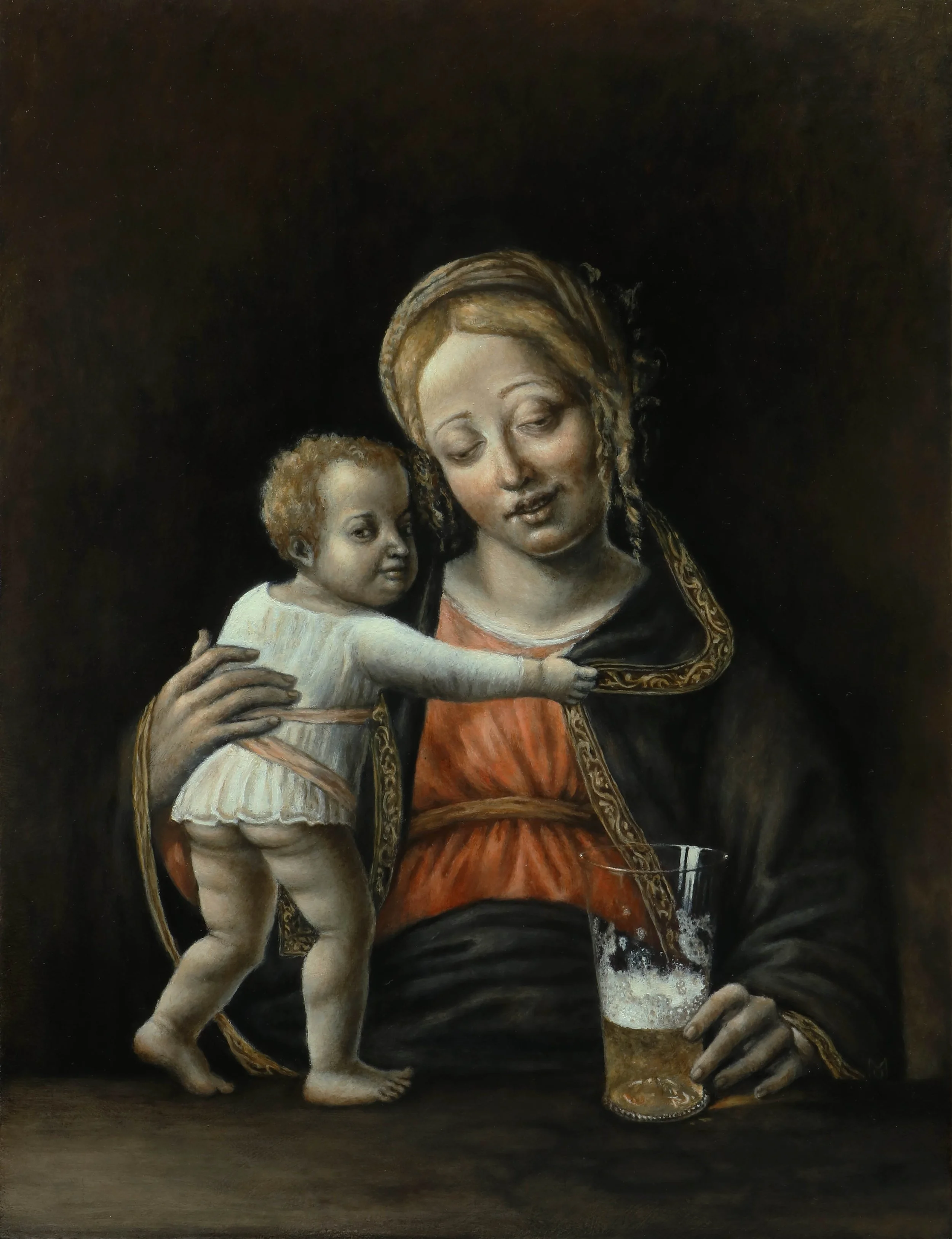
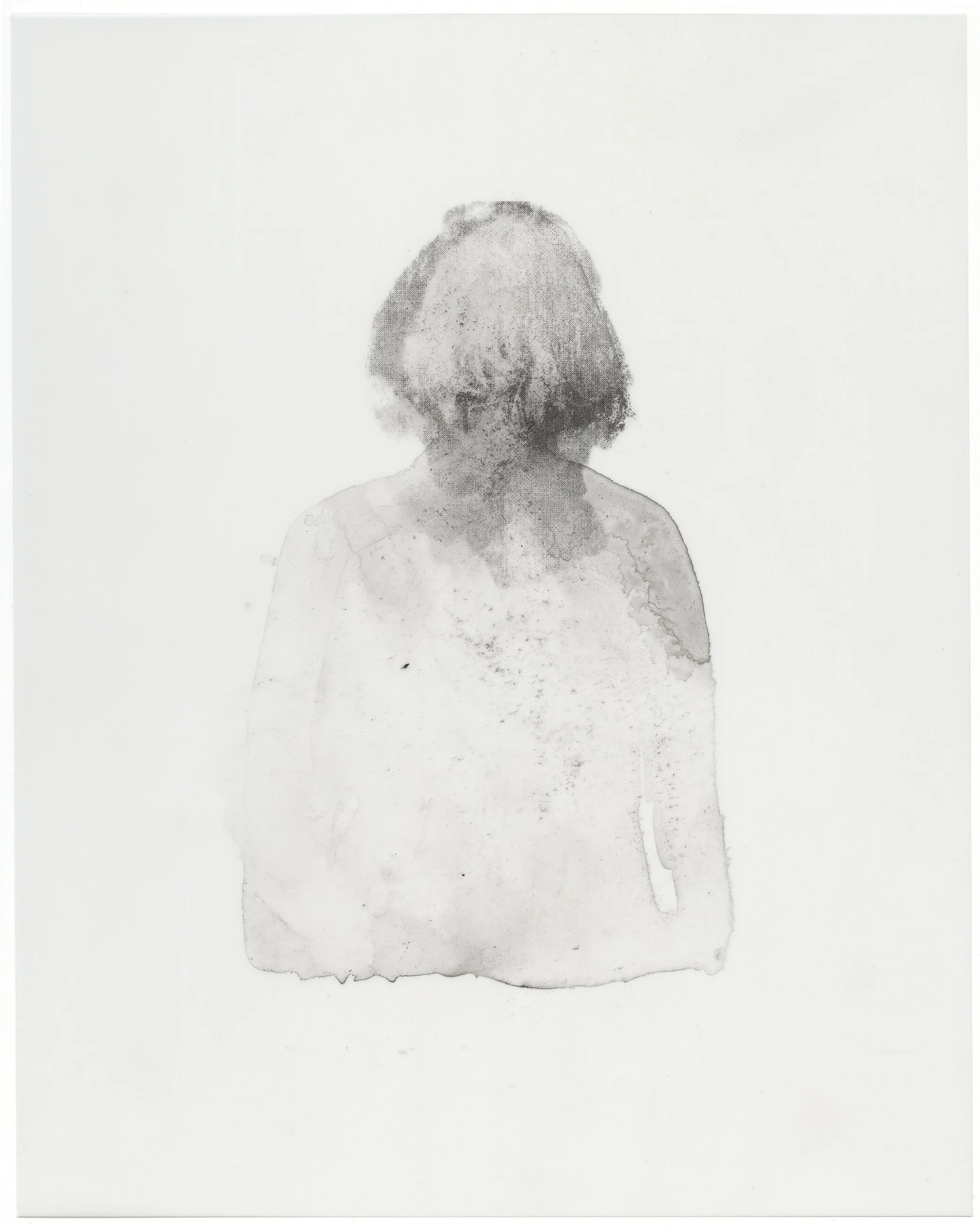
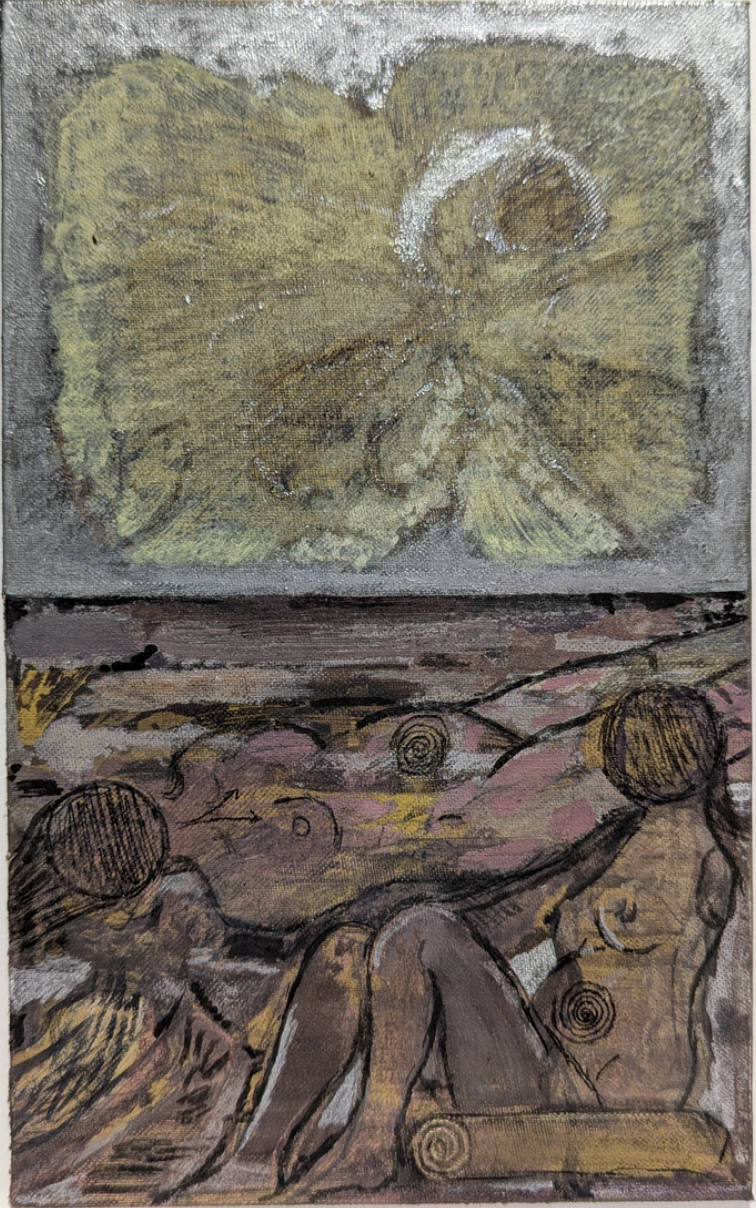
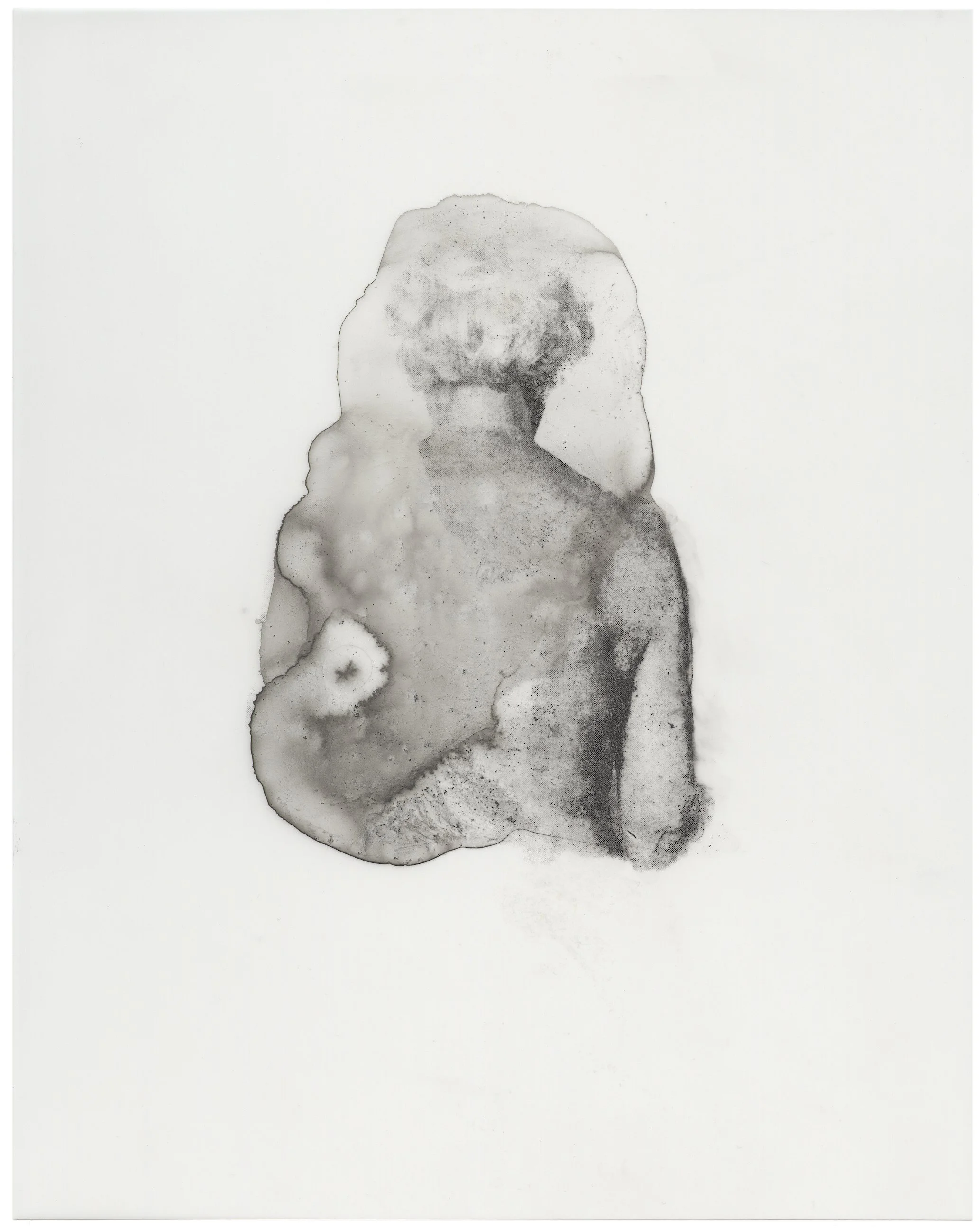
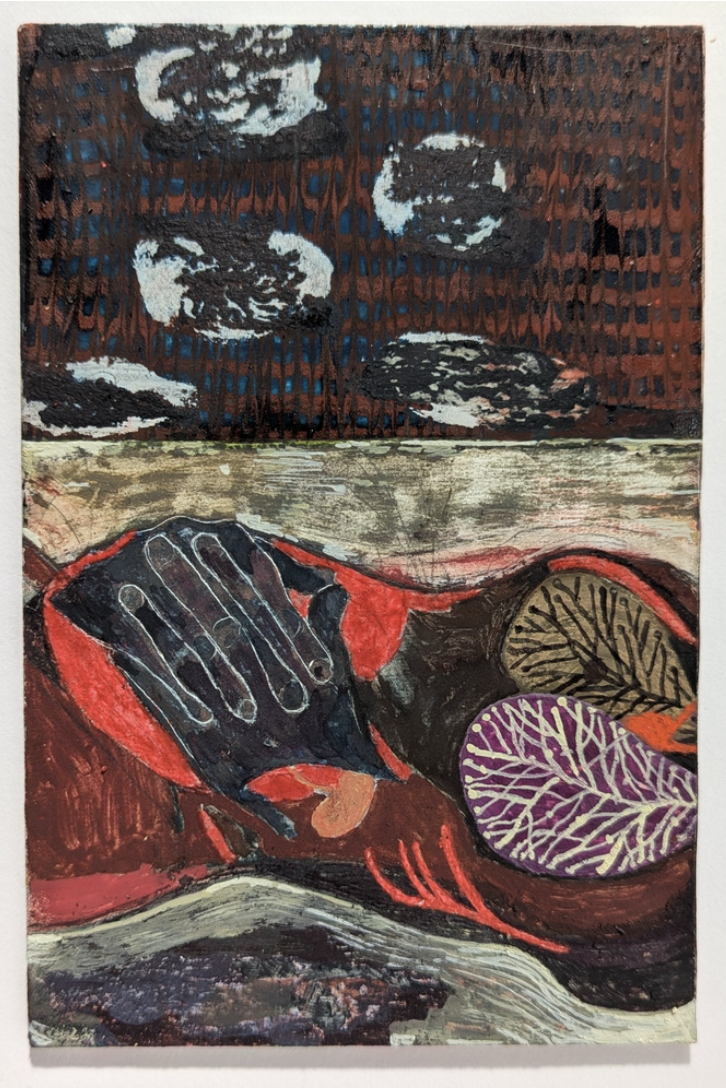
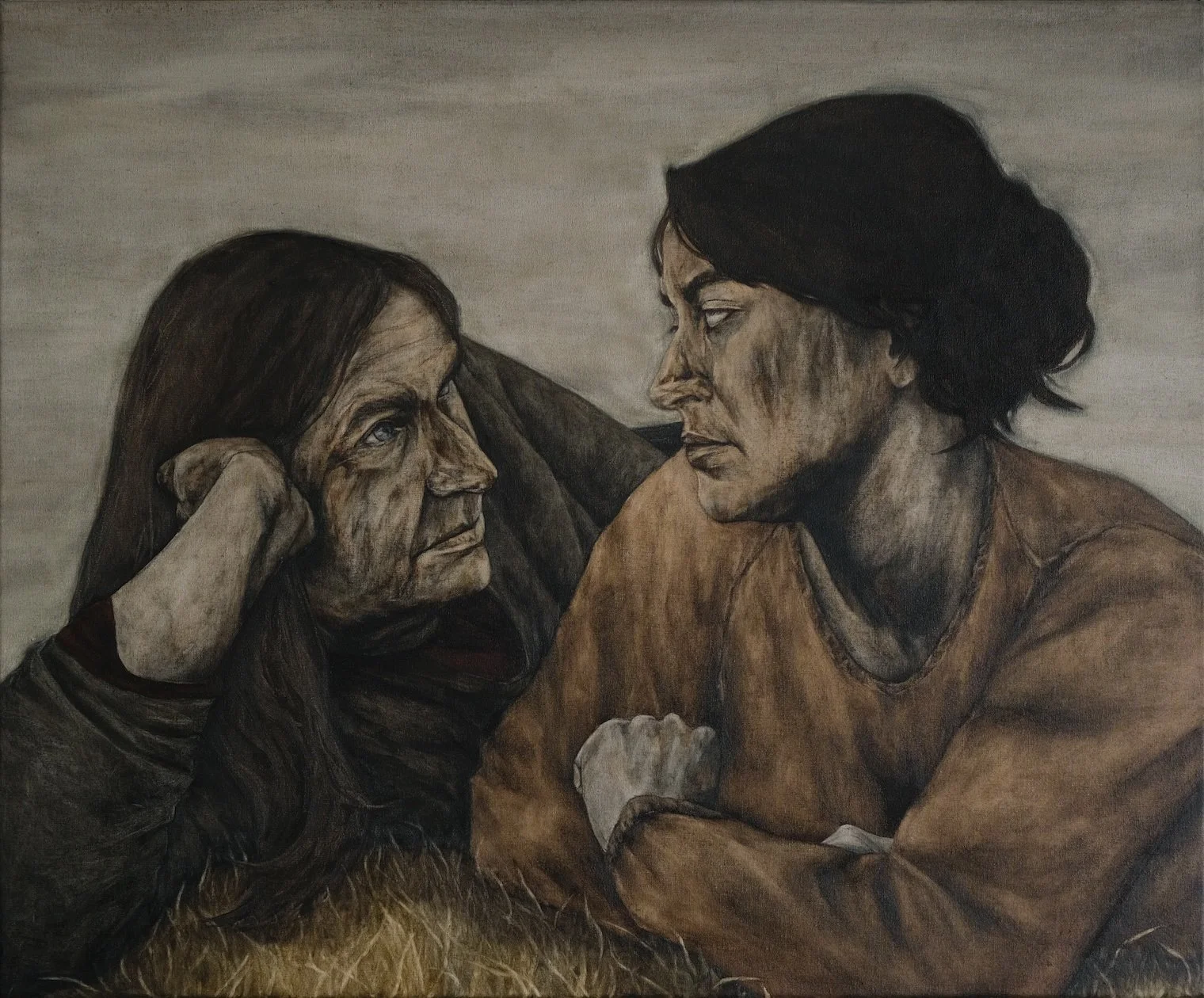
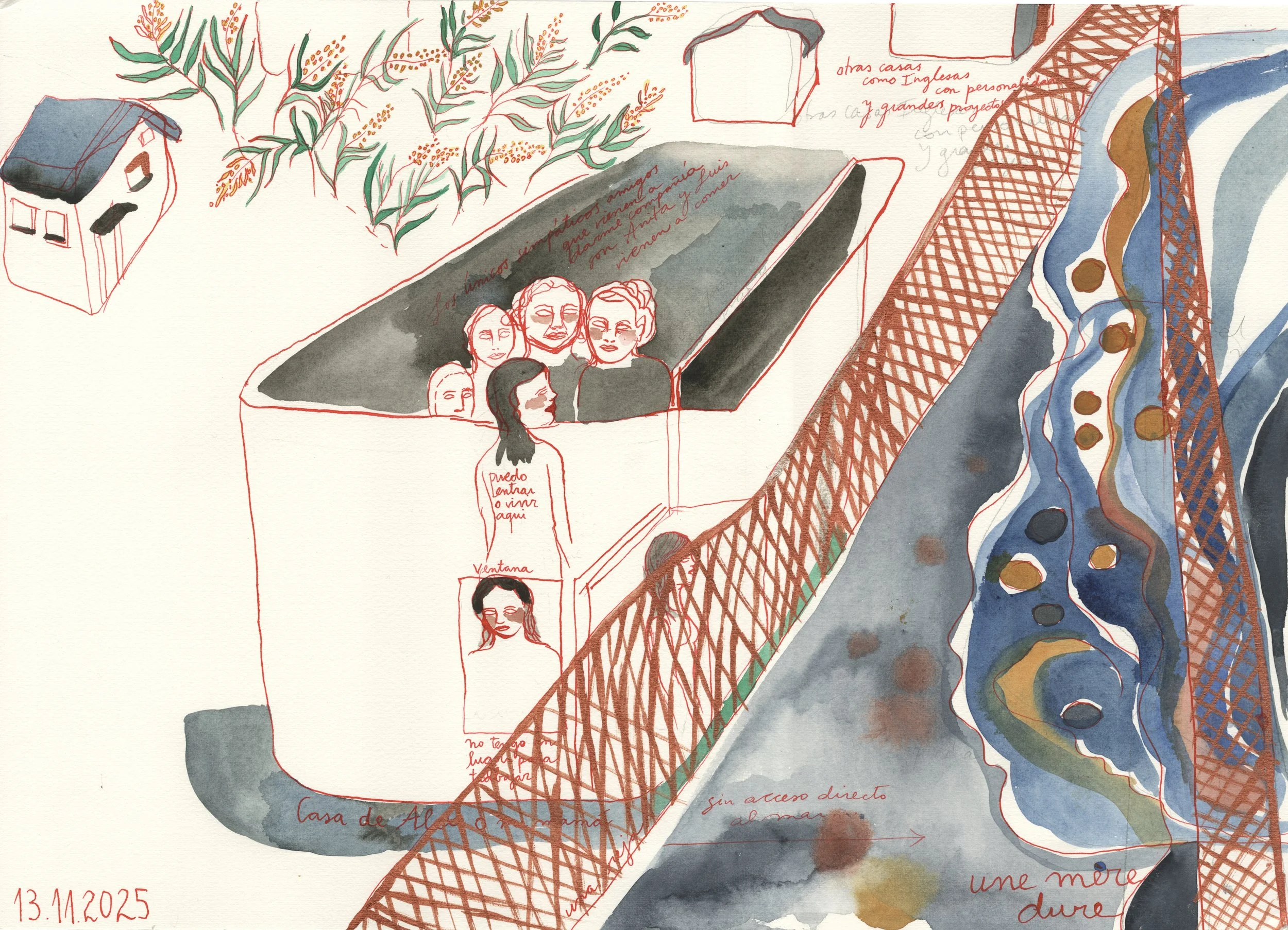
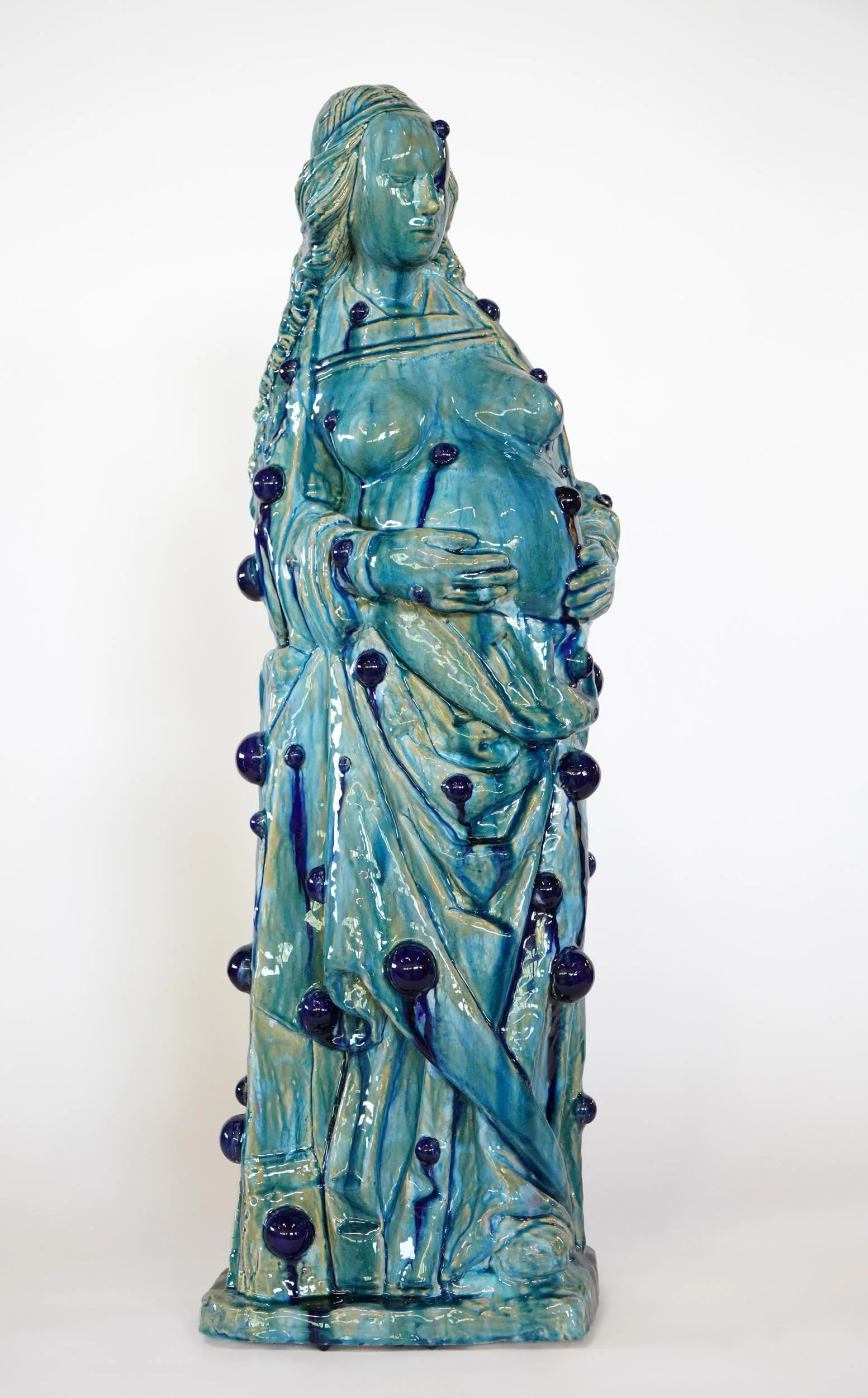
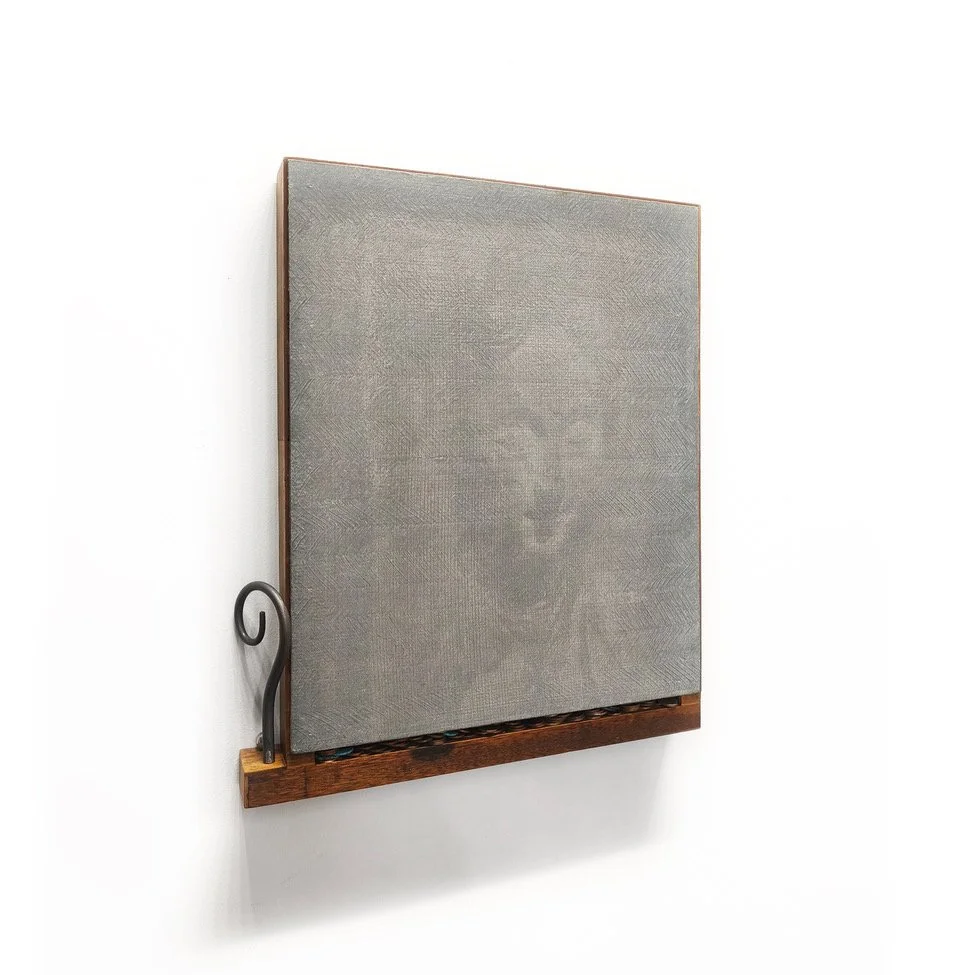
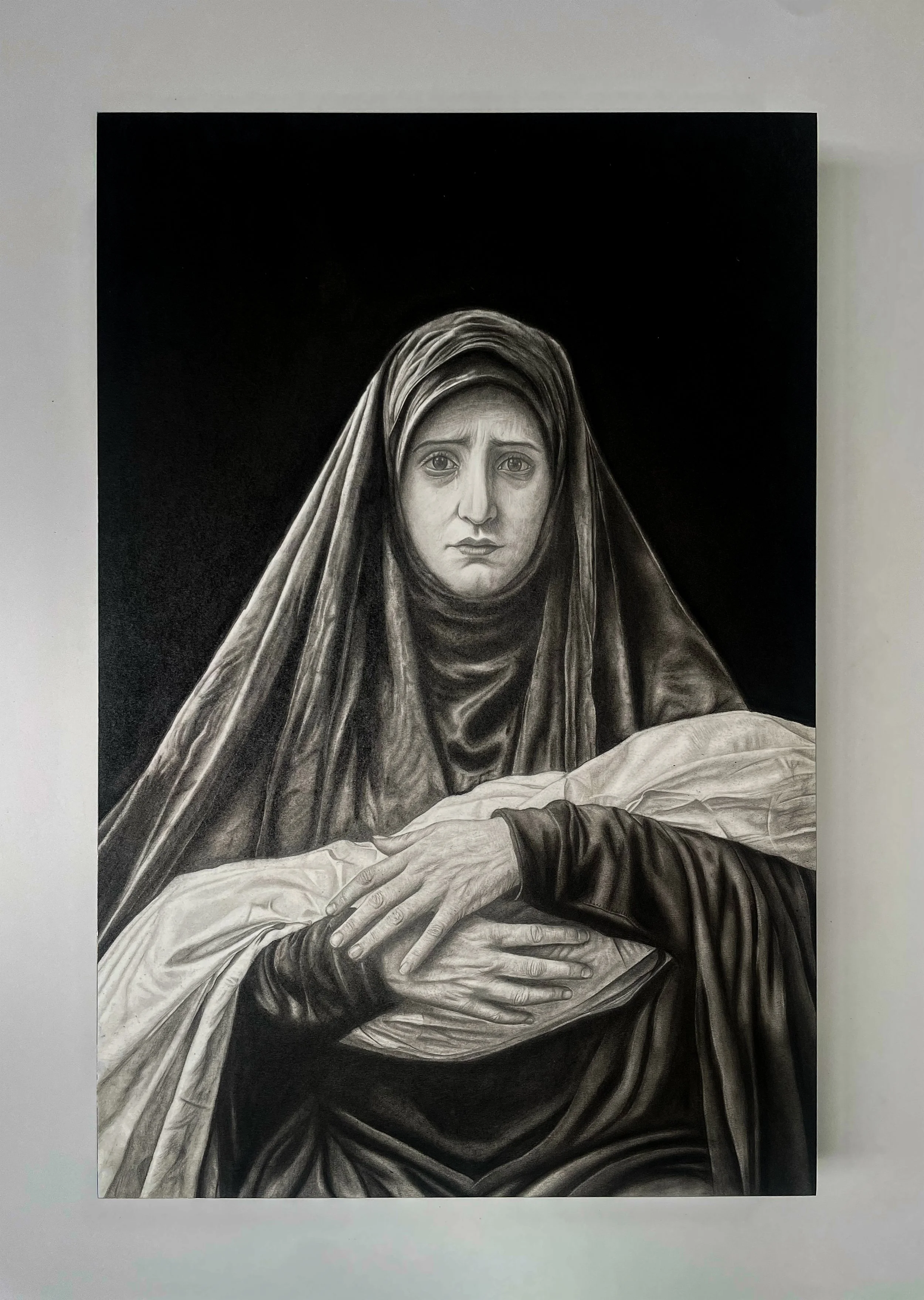
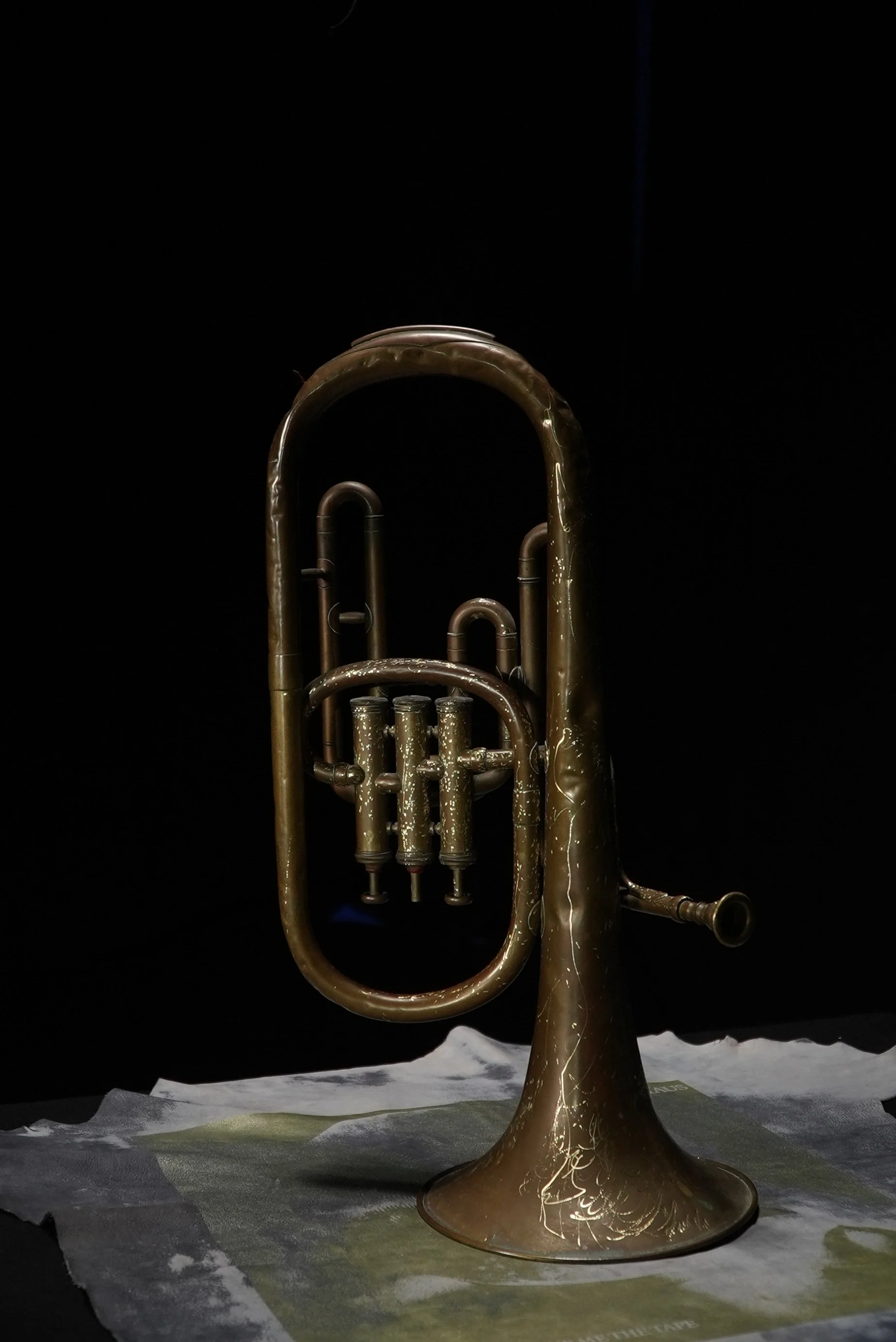
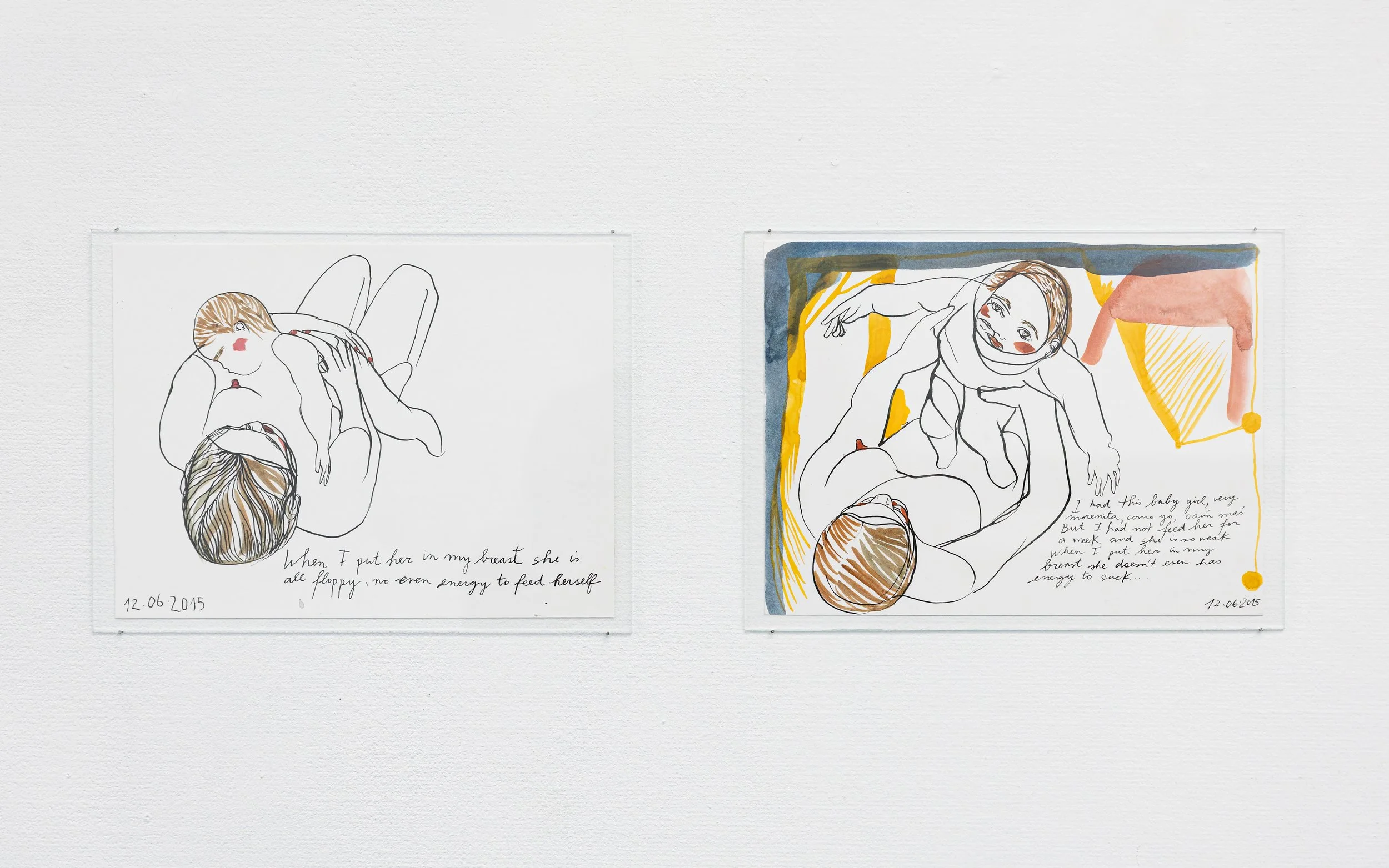
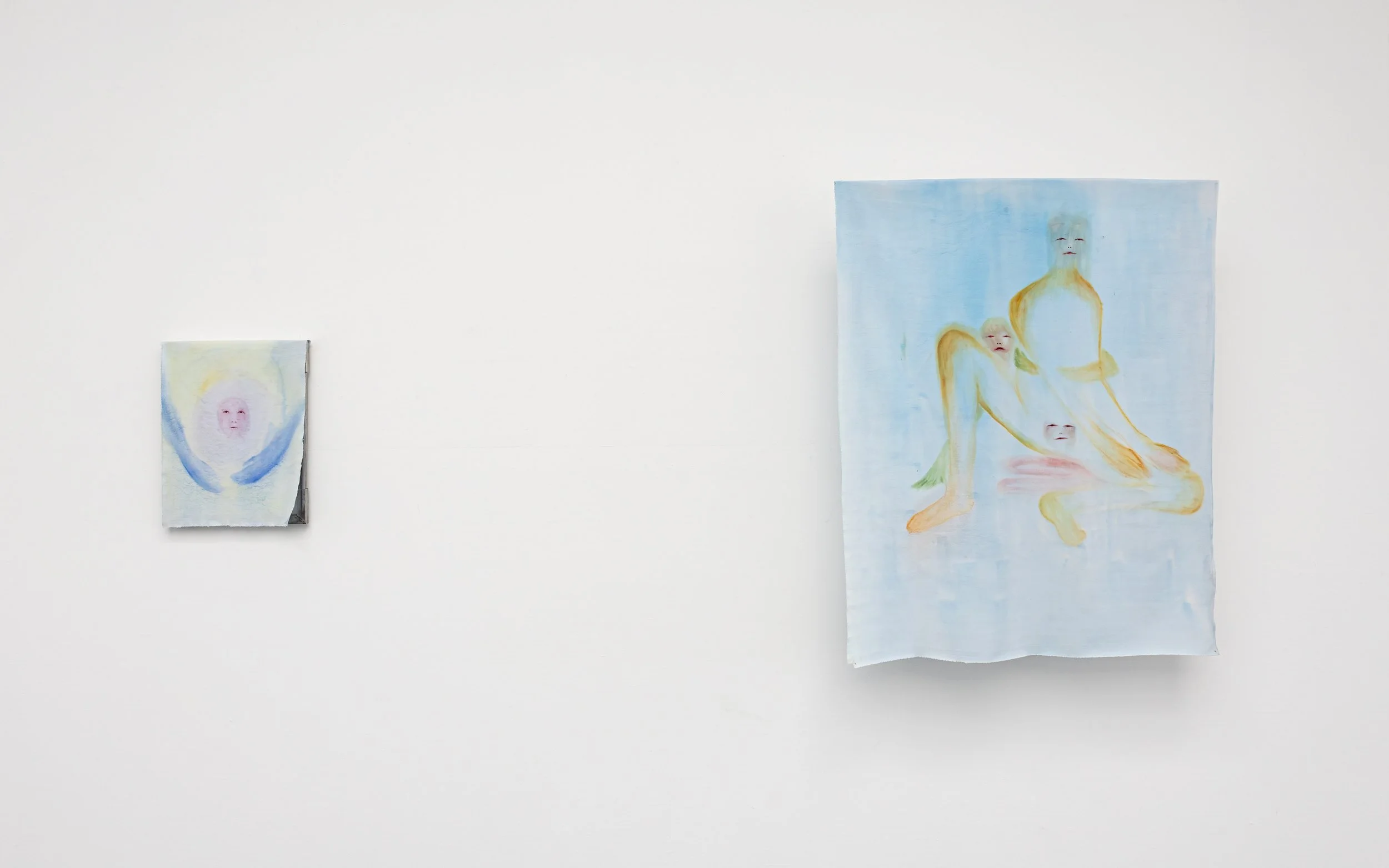
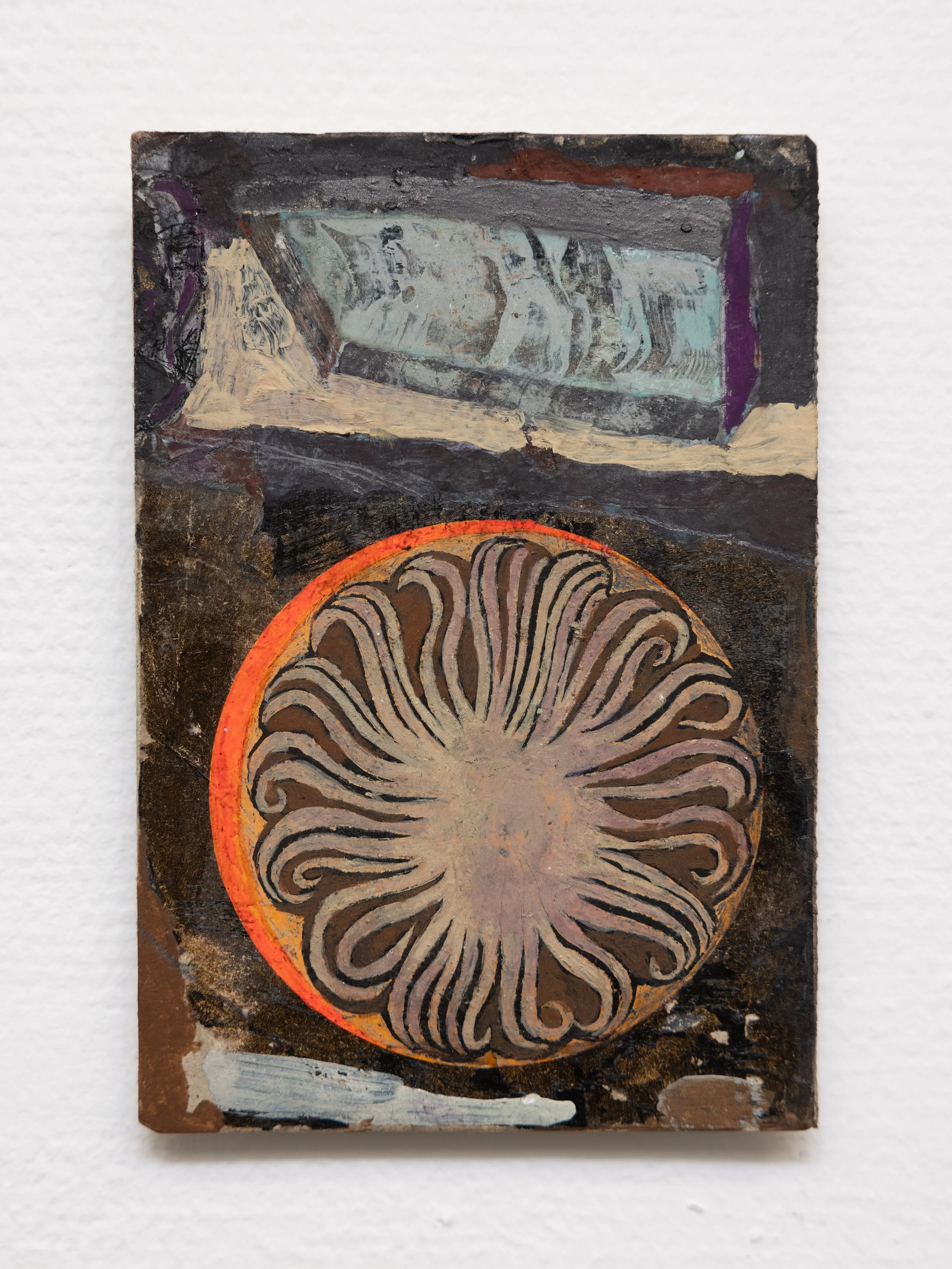
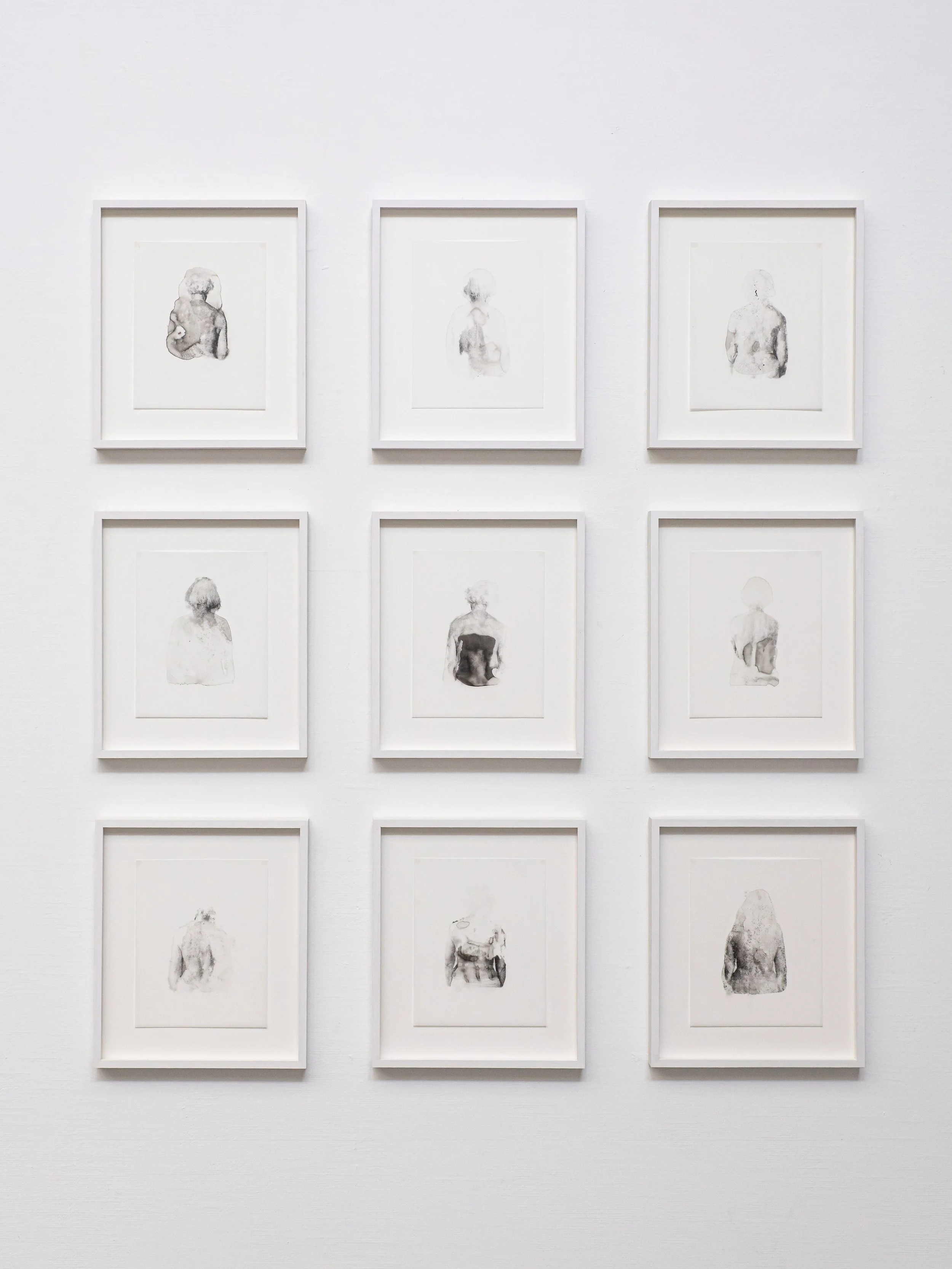
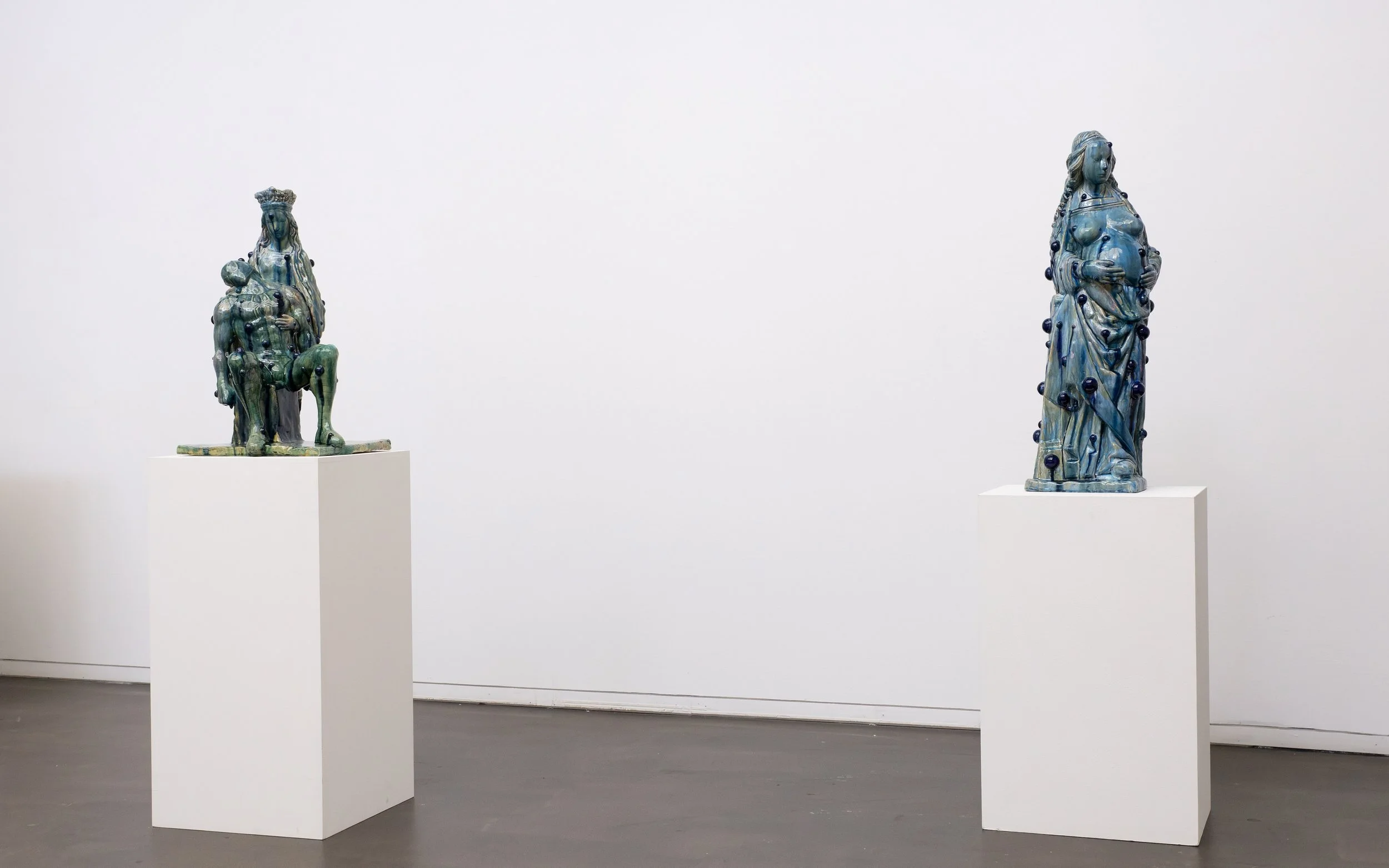
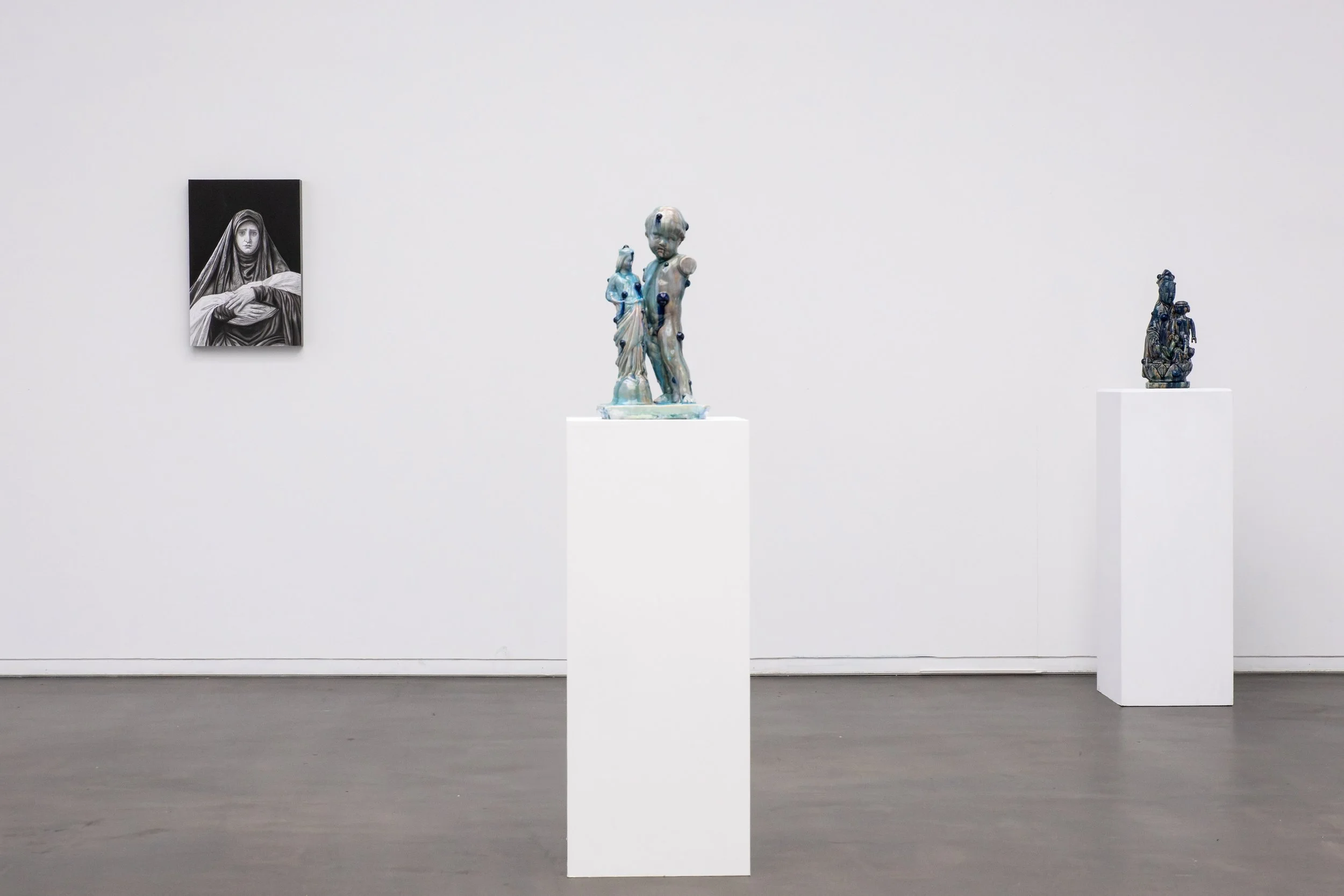
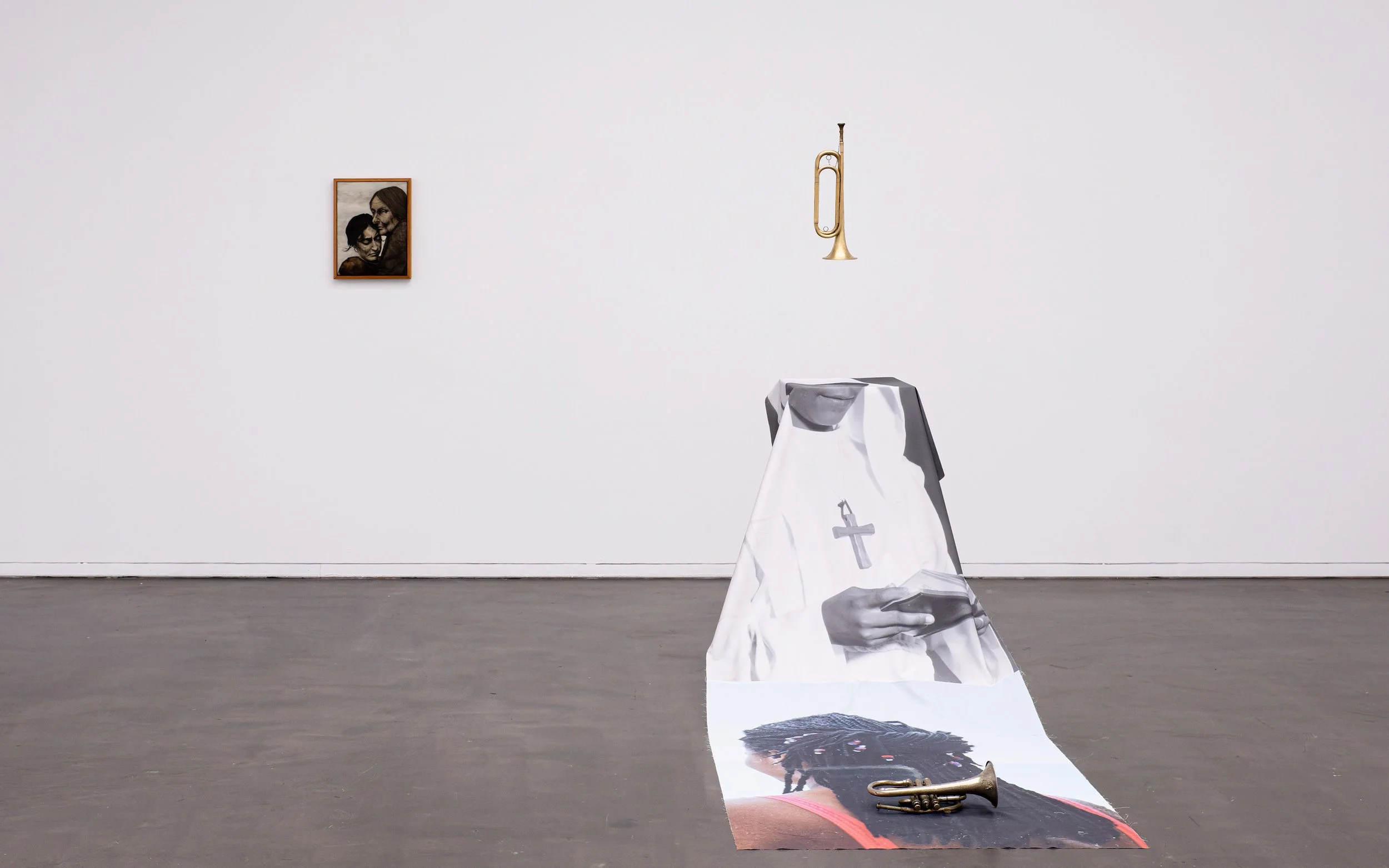
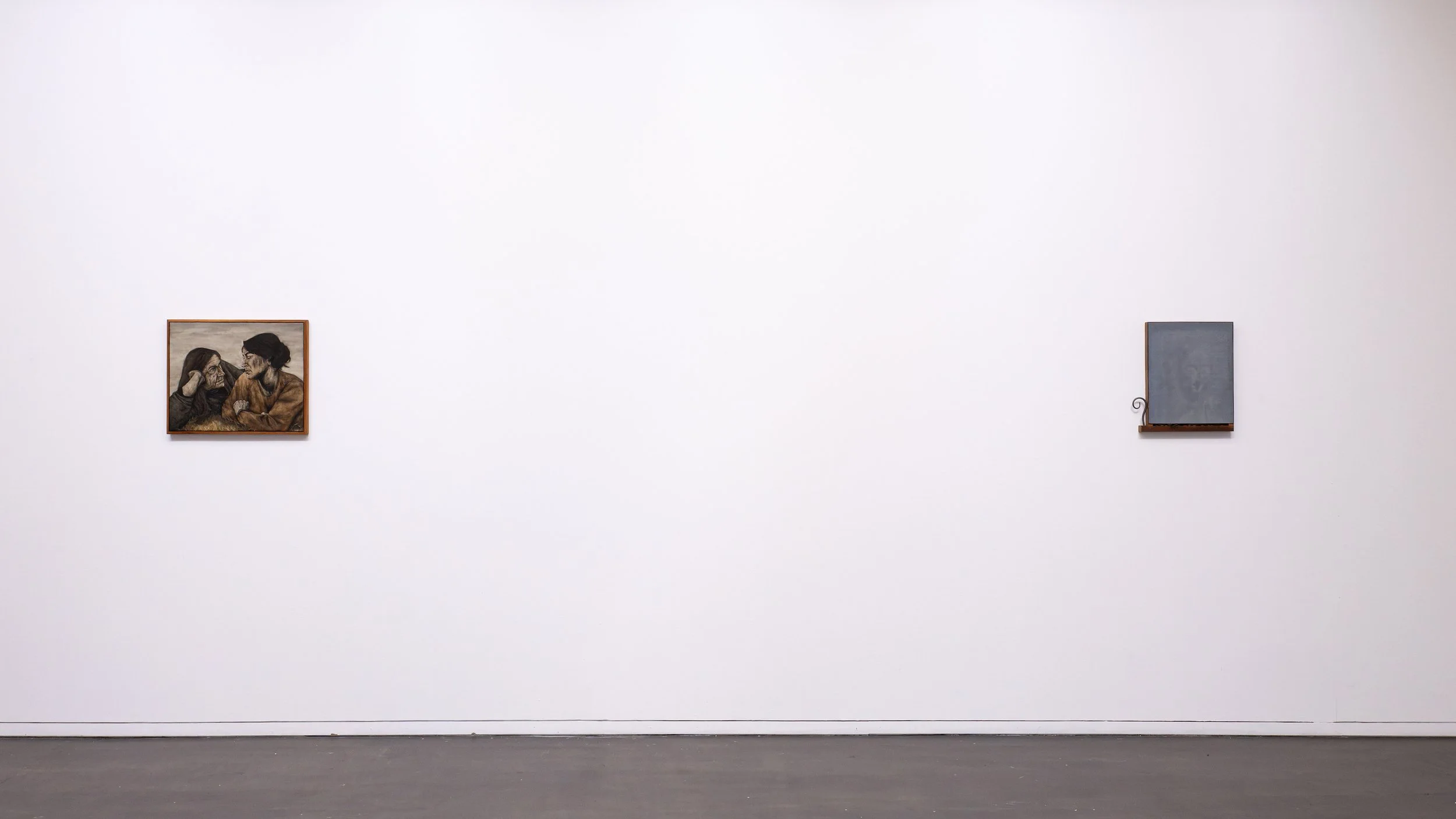
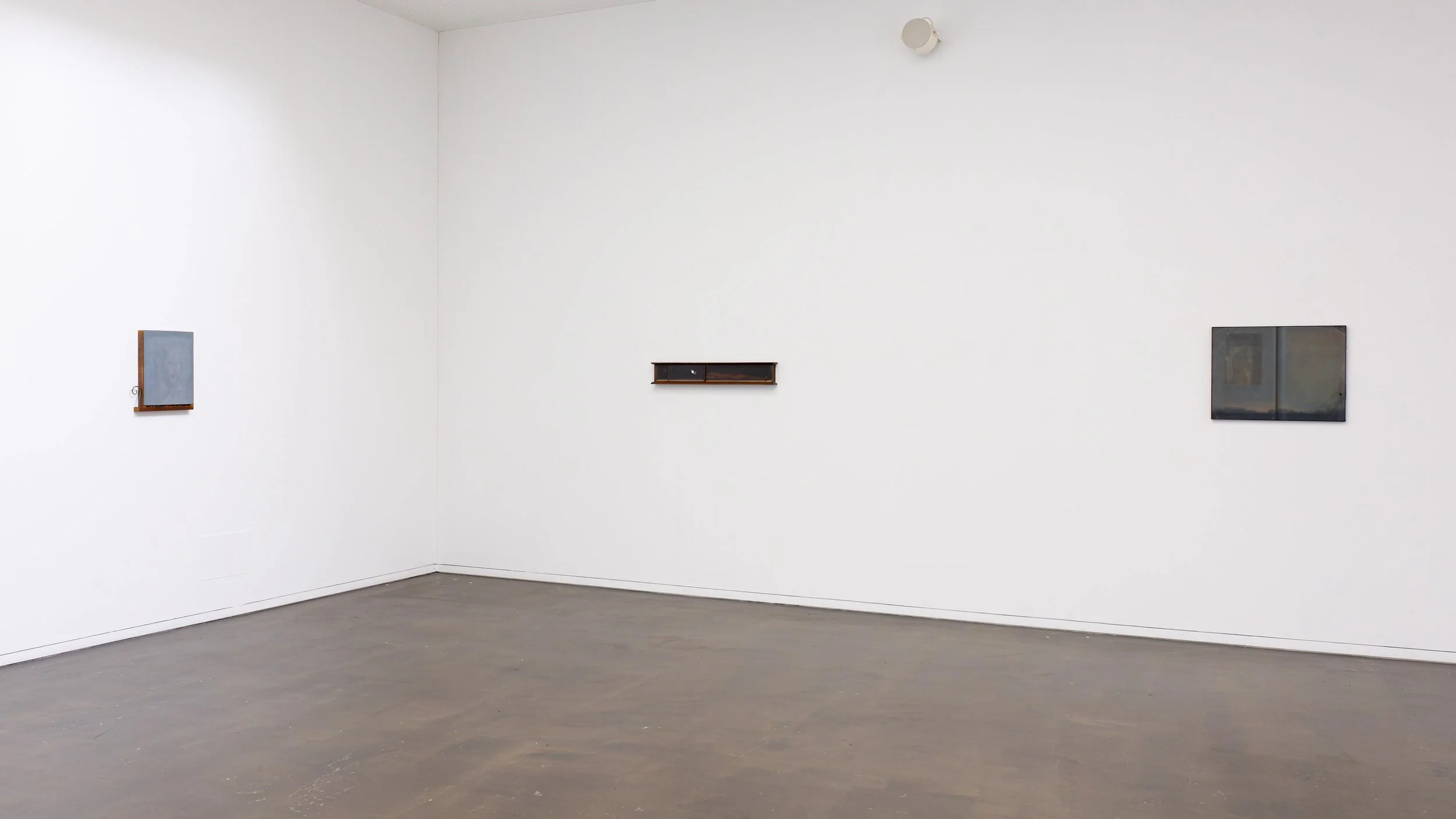
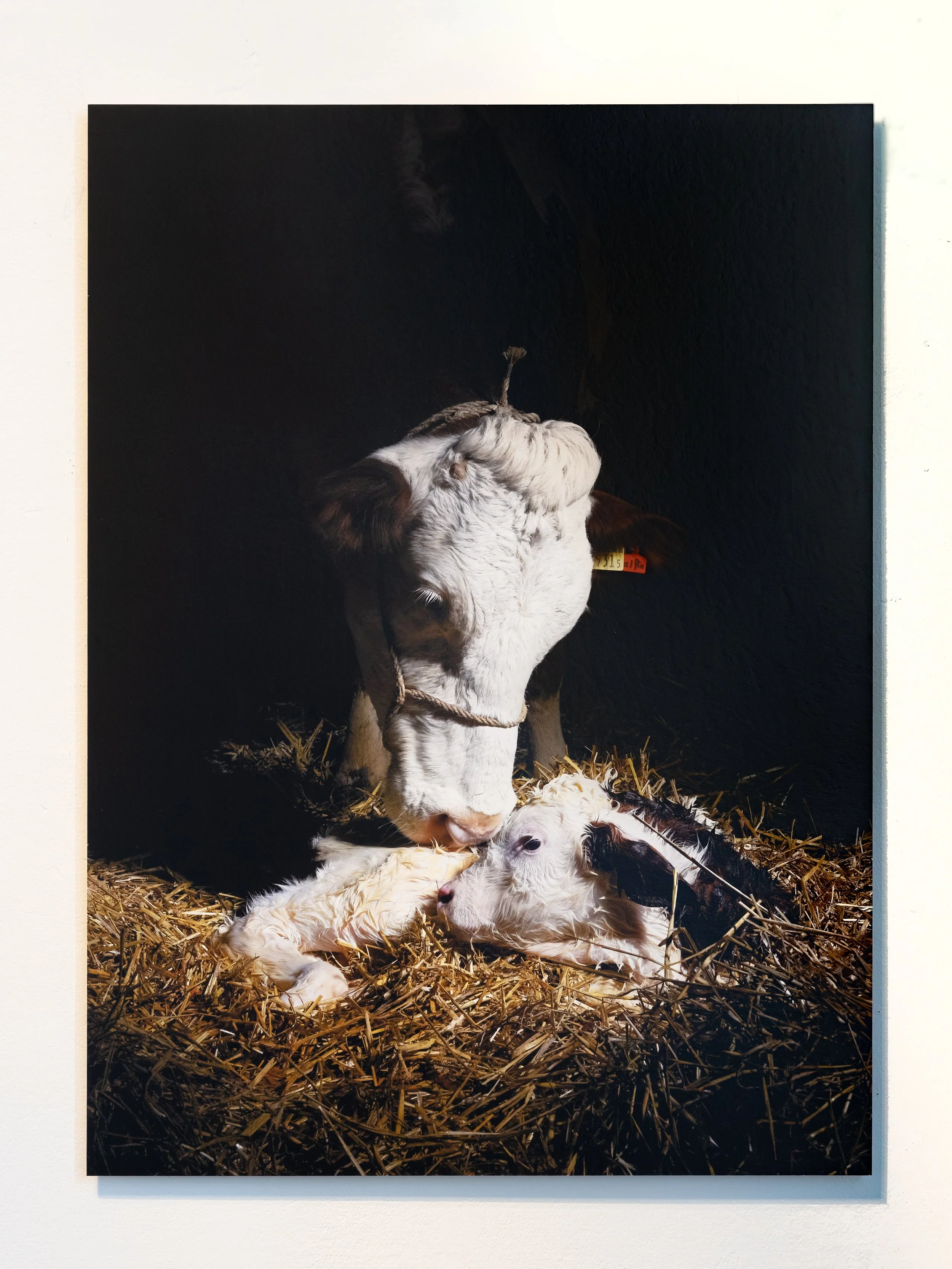
Comme un hommage à ces mères qui portent en elles une part secrète de notre existence, l'exposition explore les multiples visages de cette figure. La mère est tantôt guide, conseillère, protectrice dans les œuvres d’Eleanor Diaz Ritson. Elle apparaît parfois en crise, complexe dans ses rapports avec ses enfants, chez Marisa Cornejo. La figure maternelle n’échappe évidemment pas aux représentations religieuses occidentales de la Vierge Marie. Chez Tiziano Foucault-Gini, elle prend la forme d'une Pietà palestinienne. Elle devient le symbole des sacrifices et des deuils qui continuent aujourd'hui de se jouer sous les bombes à Gaza. Sculptée, voire déformée, chez Christian Gonzenbach, réinterprétée de manière contemporaine dans des formes anciennes chez Murielle Belin et Sosthène Baran, la Vierge – et parfois son fils – apparaissent alors dans des retables renouvelés. Parfois empreinte de cynisme, elle devient une figure ambivalente, pleine de force et de contradictions. Holly Mills partage quant à elle sa propre expérience de l’attente d’un enfant, processus qui peut-être être à la fois excitant et terrifiant. Jules Carlito Beurrier-Loncan rend hommage à sa propre mère, comédienne et musicienne de rue, à travers une installation mêlant photographies d’archives et matériaux récupérés, entre scénographie, sculpture et costume. Le corps de la mère a souvent porté, vécu, accouché, vieilli. Sa beauté réside alors aussi dans le fait qu’il a traversé le temps et que les traces de cette vie y demeurent visibles. Dans la série « derrière elle » Sophie Jodoin rend hommage au corps féminin qui a vu les années le traverser. Dans un même élan, Eva Ayache-Vanderhorst donne à voir des figures tantôt fantomatiques, tantôt intensément vivantes, hybrides, parfois en train d’accoucher, qui se déploient paradoxalement dans la délicatesse et la légèreté du textile. Anne Golaz, quant à elle, explore dans un autre registre la maternité dans le monde animal. Chez les animaux domestiques, celle-ci est souvent artificiellement provoquée par l’humain. L’image de la vache et de son veau, si douce à première vue, nous rend alors attentif·ves aux questions de séparation. Derrière l’image familière de la mère et de son petit apparaît ainsi une autre forme de relation, faite de dépendance, de soin, mais aussi de contrôle.
En traversant ces œuvres, la mère apparaît donc moins comme une figure unique ou idéale, que comme un écrin de mémoire, de transmission, de soin, de conflit, de désir et de transformation. Elle porte ce dont nous avons perdu la trace. En invitant le public à rencontrer ces multiples figures maternelles, l’exposition interroge ce qui se transmet d’un corps à l’autre, d’une génération à l’autre, mais aussi ce qui demeure tu, invisible ou impossible à restituer.
Peut-être que regarder ces œuvres revient alors à chercher, dans la mémoire des autres, les fragments d’un commencement qui nous échappe - et à reconnaître que notre histoire ne nous appartient jamais tout à fait.
Jeudi 17.09.2026, de 18h à 20h - Vernissage
Mercredi 07.10.2026, à 18h - Visite guidée de l’exposition en partenariat avec la Société des Amis des Arts
Télécharger le dossier de presse : ici
..
The mother occupies a special place in the history of art. As the cradle of civilisation and a symbol of fertility and transmission, she is omnipresent in artistic representations, from the Neolithic sculptures of voluptuous women discovered notably in Malta, right through to the entire history of Western Judeo-Christian art. In this tradition, the mother is successively portrayed as a goddess, an empress, the Mother of Rome, and then the Virgin—the holy mother, a symbol of purity and spiritual motherhood—inspiring some of the greatest painters and sculptors, from Michelangelo to Raphael and Leonardo da Vinci. Royal and dynastic portraits, for their part, affirm the lineage and political role of these mothers, notably in the works of Liotard and Élisabeth Vigée Le Brun. With the Revolution, the mother also became a political allegory, as seen in the works of Delacroix and Daumier. Yet, for centuries, the mother was primarily depicted from an external perspective, and often by men. Virgin, saint, queen, ideal mother, sacred or reprehensible figure: she seems assigned to specific roles. In the 20th century, women artists began to shift this perspective towards the lived experience of motherhood, its ambivalences, anxieties and constraints. Louise Bourgeois and Niki de Saint Phalle thus explored the complex links between motherhood, fear and patriarchal taboos; more recently, Annette Messager, Fatima Mazmouz and Laetitia Ky have, in turn, questioned representations of the female body, pregnancy, false pregnancies and abortion. Motherhood thus becomes a space for political reflection on the body, reproductive rights, justice, violence and the inequalities associated with parenthood.
This casts a new light not only on motherhood itself, but also on its representation in the history of art. And perhaps there remains a dimension to this experience that still eludes the image: that which precedes our own memory.
We often think of the mother-child relationship in vertical terms. As children, we admire, love, seek out and reject our mothers. Yet there is a part of this relationship that eludes us entirely: the first years of our existence. Perhaps the most formative of all, and yet those of which we retain almost no memory.
Our earliest memories are not the very first moments of our lives. They come much later. Before them lie whole years of which we know almost nothing. This memory has not vanished. It exists elsewhere. It belongs to the one who saw us being born, smiling, walking, speaking. To the one who bore witness to our first movements, our first fears, our first impulses. Whether biological mother, adoptive mother, stepmother or any of the women who have filled that role, they are often the sole custodians of this part of our history: that life is carried away by the one who raised us.
Just as our memory begins too late, the visitor’s gaze always arrives after the act of creation. The hesitations The hesitations, the intuitions, the abandoned gestures, the doubts, and the experiments that shaped the work remain invisible. We therefore encounter a work of art in the same way that we encounter our own existence: in the midst of its story. The beginning has already passed. The exhibition thus becomes a space for transmission. The works do not seek to depict motherhood in an illustrative manner, but to make perceptible that which usually remains invisible: memories carried by others, acts of care, legacies, bodies that bear the marks of time.
As a tribute to these mothers who carry within them a secret part of our existence, the exhibition explores the many facets of this figure. In Eleanor Diaz Ritson’s works, the mother is at times a guide, an advisor, a protector. In Marisa Cornejo’s work, she sometimes appears in crisis, grappling with complex relationships with her children. The maternal figure is, of course, not absent from Western religious representations of the Virgin Mary. In Tiziano Foucault-Gini’s work, she takes the form of a Palestinian Pietà. She becomes a symbol of the sacrifices and grief that continue to unfold today amidst the bombings in Gaza. Sculpted, even distorted, in Christian Gonzenbach’s work; reinterpreted in a contemporary manner within traditional forms in Murielle Belin’s work; and reinterpreted in a contemporary manner within traditional forms by Murielle Belin and Sosthène Baran; the Virgin – and sometimes her son – thus appear in reimagined altarpieces. At times tinged with cynicism, she becomes an ambivalent figure, full of strength and contradictions. Holly Mills, for her part, shares her own experience of expecting a child, a process that can be both exciting and terrifying. Jules Carlito Beurrier-Loncan pays tribute to his own mother, an actress and street musician, through an installation combining archive photographs and found materials, blending elements of set design, sculpture and costume. A mother’s body has often carried, lived through, given birth and aged. Its beauty therefore also lies in the fact that it has stood the test of time and that the traces of that life remain visible upon it. In the series ‘derrière elle’, Sophie Jodoin pays tribute to the female body that has seen the years pass. In a similar vein, Eva Ayache-Vanderhorst presents figures that are at times ghostly, at times intensely alive, hybrid in nature, and sometimes in the act of giving birth, which paradoxically unfold within the delicacy and lightness of the fabric. Anne Golaz, for her part, explores motherhood in the animal world from a different perspective. In the case of domestic animals, this is often artificially induced by humans. The image of the cow and her calf, so tender at first glance, draws our attention to issues of separation. Behind the familiar image of the mother and her young, another form of relationship emerges, one characterised by dependence, care, but also control.
As we move through these works, the mother thus appears less as a singular or ideal figure than as a repository of memory, transmission, care, conflict, desire and transformation. She carries within her that which we have lost track of. By inviting the public to encounter these multiple maternal figures, the exhibition explores what is passed on from one body to another, from one generation to the next, but also what remains unspoken, invisible or impossible to recreate.
Perhaps, then, looking at these works amounts to searching, within the memories of others, for the fragments of a beginning that eludes us – and to recognising that our history never quite belongs to us.
Thursday, September 17, 2026, 6-8pm - Opening
Wednesday, October 7, 2026, 6pm - Guided tour of the exhibition in partnership with the Société des Amis des Arts
To download the press release : here
….